
Vacheron Constantin Patrimony for minimalist collectors comes down to one decision: buy the thinnest, cleanest dress case Geneva makes and ignore every complication the market is chasing this cycle. This segment isn't buying a Patrimony to flip in eighteen months or to wear at a dive site — they're buying a permanent, low-noise anchor piece that reads correctly in a boardroom, a gallery opening or a quiet Sunday. What separates a minimalist collector from a general Vacheron Constantin buyer is restraint: no chronograph pushers, no date window breaking the dial symmetry, no oversized case fighting the wrist.
- Vacheron Constantin Patrimony suits minimalist collectors chasing a slim, symmetrical dress case under 8.5mm thick.
- Reference correctness and movement finishing decide value here, not whether the box and papers survived.
- Cartier Santos and Hublot Classic Fusion are the closest minimalist alternatives, each with a different design compromise.
- Buy: current self-winding Patrimony references for daily wear; Wait: rare manual-wind pieces until authentication is confirmed.
Why Patrimony matters for minimalist collectors
Vacheron Constantin has built dress watches since 1755, and the Patrimony line is the maison's clearest statement of that heritage stripped to essentials: a round case, baton or dauphine hands, and a dial with no date window to break the symmetry. For a minimalist collector, that's the entire pitch — no chronograph subdials competing for attention, no rotating bezel, no bracelet architecture pulling the eye away from proportions.
The best Vacheron Constantin watches for serious collectors span sports-luxury references like the Overseas through to grand complications, but Patrimony sits at the quiet end of that spectrum on purpose. Minimalist buyers in 2026 are less interested in brand heat and more interested in a case that still looks correct on a wrist in 2036. That's a different buying calculus than chasing a hyped reference, and it changes which details matter at the point of purchase.
How to buy a Vacheron Constantin Patrimony as a minimalist collector
Define your case-size ceiling before you shop
Current Patrimony references run roughly 40mm to 42.5mm across the dial, with case heights sitting near 8mm — thin by any modern standard. Measure before you fall for a dial photo.
- Check wrist circumference against lug-to-lug length, not just diameter
- A 40mm case suits most wrists between 150mm and 180mm circumference
- The 42.5mm reference wears larger under a cuff than the number suggests
- Try both sizes on a strap before committing to either
Read the dial before the reference number
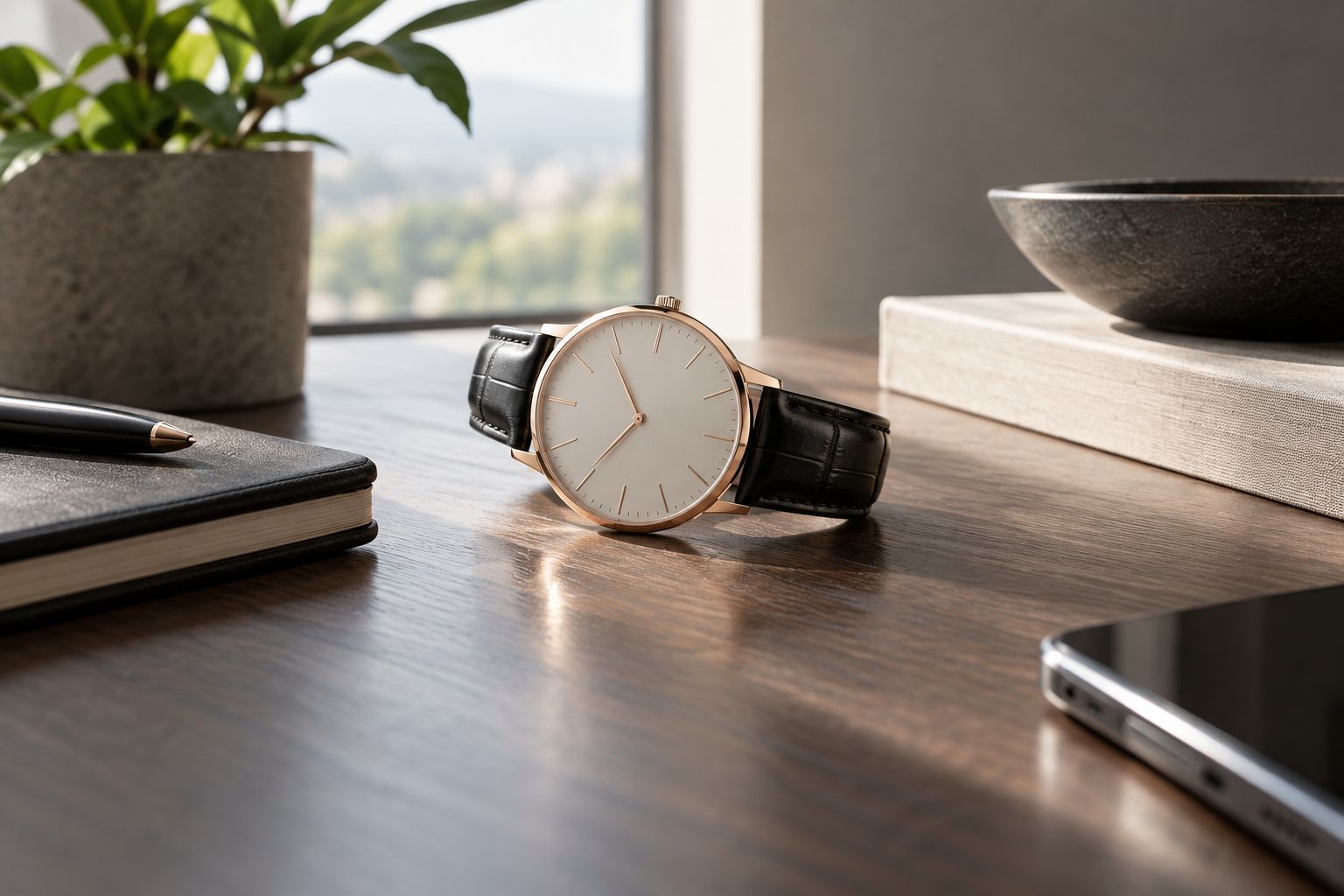
A minimalist buyer should evaluate the dial layout first: baton markers, dauphine hands, guilloché texture, and — critically — no date aperture. The reference number confirms what you're looking at; the dial tells you whether it fits your collection.
- Confirm hand style matches the era of the case (dauphine vs baton varies by production run)
- Check for consistent lume or polish across all markers
- Look for dial refinishing, which flattens texture and kills resale confidence
- Compare manual-wind and self-winding dial layouts — they're not identical
Verify authenticity independent of the box
A Patrimony's value sits in the case, the movement and the correctness of the reference — never in whether a green box survived four decades of storage. Treat packaging as irrelevant to the buying decision and focus verification where it actually matters.
- Cross-check the case reference against known Patrimony production ranges
- Confirm movement caliber matches the stated model (manual vs automatic)
- Look for consistent case finishing between lugs and bezel
- Have a specialist inspect the movement through the caseback where possible
- Read how to check for box and papers when buying a used watch before you let accessories influence the price
Working with a specialist retailer speeds this step up considerably — a dealer who inspects movements daily catches inconsistencies a casual buyer misses in a single viewing.
Grade condition on the case and movement, not accessories
Condition grading for a Patrimony should focus on case edges, crown wear, and movement service history — not on the completeness of an accessory set.
- Check for lug polishing that's rounded the original case edges
- Ask for service records where the seller has them
- Inspect the crystal for scratches versus the case for dents (very different repair costs)
- Confirm the movement runs within accepted accuracy tolerances for a mechanical watch
For a full framework on this, how to understand luxury watch condition grading walks through the grading tiers dealers actually use.
Decide between new and pre-owned
A new Patrimony guarantees an untouched case and current dial specification. A pre-owned example, correctly authenticated, can offer an older dial variant or a discontinued case size some minimalist collectors specifically want.
- New: zero prior wear, current production specification only
- Pre-owned: access to discontinued sizes and dial layouts
- Pre-owned requires independent movement verification every time
- Neither route should be decided on packaging completeness
Set a budget band without chasing hype
Minimalist dress watches don't move on hype cycles the way sports-luxury steel does. Set your ceiling based on the reference and condition tier you want, not on secondary-market noise from unrelated categories.
- Separate your budget for the watch from any budget for servicing
- Expect manual-wind references to price differently from self-winding models
- Don't let a hyped sports reference in another brand's range anchor your Patrimony budget
- Build in a service reserve for any pre-owned mechanical purchase
Compare your minimalist dress-watch options
| Option | Best for | Case profile | Key limitation | Verdict |
|---|---|---|---|---|
| Vacheron Constantin Patrimony | Collectors wanting the flattest, quietest dress case with heritage finishing | Round, roughly 40mm-42.5mm, near 8mm thick | Limited dial variation across current production | Buy |
| Cartier Santos | Collectors wanting minimalist design with a recognisable silhouette | Square case, integrated bracelet | Reads sportier than a pure dress case | Hold |
| Hublot Classic Fusion | Collectors wanting a minimal dial with modern case material options | Round case, varied case materials | Material choices can distract from dial-first restraint | Hold |
| Patek Philippe Calatrava | Collectors upgrading toward the deepest heritage dress reference | Round case, comparably thin profile | Demand extends sourcing timelines significantly | Wait |
Vacheron Constantin Patrimony is the strongest pick for a collector who wants restraint over recognition — it's a watch built to disappear under a cuff, not to announce itself across a room.
Common mistakes minimalist collectors make with Patrimony purchases
- Chasing a complicated reference because it's rarer, then losing the clean-dial appeal that drew them to Patrimony in the first place
- Treating box and papers as a value signal instead of checking the movement and case finishing directly
- Sizing to trend rather than wrist, picking 42.5mm because a sports-luxury reference made larger cases feel normal
- Skipping independent movement verification on a pre-owned piece because the seller's photos looked clean
- Ignoring dial texture differences between manual-wind and self-winding references, which affects long-term satisfaction more than the reference number does
Considering a Patrimony purchase in 2026?
Get sourcing and authentication guidance from a specialist dealer.
FAQ
What makes the Vacheron Constantin Patrimony different from the Overseas?
The Patrimony is a pure dress watch with a thin round case and no sporting elements, while the Overseas is a steel sports-luxury reference with an integrated bracelet. Minimalist collectors typically prefer Patrimony for its restraint.
Is Vacheron Constantin Patrimony a good investment in 2026?
Patrimony holds value on reference correctness and condition rather than hype-driven demand, making it a steadier long-term hold than trend-driven sports models in 2026. It's bought for permanence, not short-term appreciation.
Does a Patrimony need its original box and papers to be valuable?
No — the case, movement condition and reference correctness determine value, not accessories. A box cannot be worn and adds nothing to how the watch performs or wears.
What case size should a minimalist collector choose?
Most minimalist collectors do well with the 40mm Patrimony reference on wrists under 180mm circumference, moving to 42.5mm only on larger wrists. Try both on a strap before deciding.
How does Patrimony compare to a Cartier Santos for minimalism?
Patrimony is a round, pure dress case, while the Santos is square with a sportier integrated bracelet. Choose Patrimony for formal restraint and Santos if you want a recognisable minimalist silhouette that still reads casual.
Should I buy new or pre-owned Patrimony?
New guarantees current specification with zero wear, while pre-owned can offer discontinued dial layouts or case sizes at the cost of requiring independent authentication. Neither choice should hinge on whether original packaging survived.
How do I authenticate a pre-owned Vacheron Constantin Patrimony?
Cross-check the case reference against known Patrimony production ranges and have the movement inspected through the caseback by a specialist. Service records help but aren't required for a watch to be genuine.
What's the biggest mistake minimalist collectors make when buying Patrimony?
Sizing up to 42.5mm out of habit from sports-luxury trends, when the dial proportions were designed around the smaller case. Try the reference you actually intend to wear daily before deciding.
One last thing
The detail most minimalist collectors miss on a Patrimony isn't the case or the dial — it's the caseback. A closed caseback keeps the profile clean and true to the dress-watch brief, but it also means movement condition can only be confirmed by someone who's actually opened enough of these to know what correct finishing looks like. That's the single check worth paying a specialist for before you commit in 2026.


