
Ruby rings for a 40th wedding anniversary mark four decades of marriage with the one gemstone tradition assigns to that exact year, and the person shopping for one usually already owns fine jewellery. Unlike a first-time engagement ring buyer, this buyer is judging a ruby against pieces worn for years, not researching cuts from scratch.
If the couple married in 1986, 2026 is their exact 40th year, and ruby is the gemstone both the traditional and modern Western gift lists assign to it. That timing detail matters more than most buyers realise: ruby applies to the 40th anniversary specifically, not the 39th or 41st, so confirming the actual wedding date before buying avoids an expensive mismatch. For broader context on matching a stone to a milestone year, fine jewellery for wedding anniversaries covers the full gift-list sequence beyond ruby.
- Ruby rings are the traditional 40th wedding anniversary gift in Australia, and pigeon-blood red commands the highest value in 2026.
- A solitaire or three-stone ruby ring suits daily wear; a ruby eternity or stacking band suits pairing with an existing wedding set.
- Confirm heat treatment disclosure and independent gemological certification before buying — undisclosed treatment is the most common ruby dispute in the trade.
- Ruby rates 9 on the Mohs hardness scale, second only to diamond, so a properly set ruby ring holds up to daily 2026 wear.
Why this matters
A couple married in 1986 hits their 40th anniversary in 2026, and that math is the whole reason this search exists — people don't shop for ruby rings anniversary gifts on a whim, they shop against a fixed date. The buyer is often an adult child coordinating a gift, or one spouse buying for the other, and both are comparing the ruby against jewellery the recipient already wears every day.
That changes what "best" means here. A 25-year-old buying an engagement ring cares about cut and story. A 40th-anniversary buyer cares about whether the ring matches an existing wedding set, whether it fits a hand that's worn rings for decades, and whether the stone is genuine enough to survive scrutiny from a recipient who's seen plenty of jewellery by now.
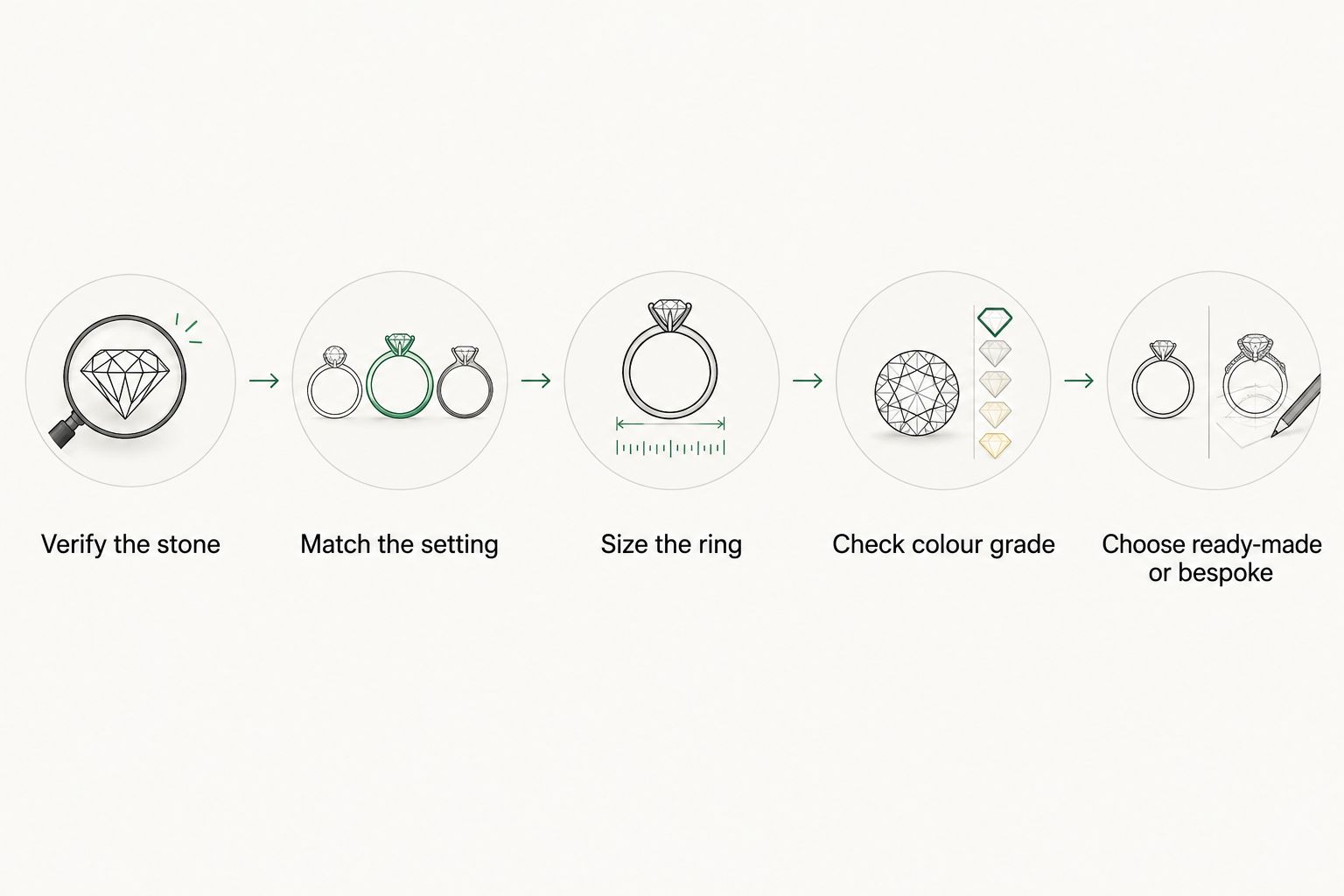
Verify the stone is genuine ruby, not a treated substitute
Ruby fraud at the low end usually isn't a fake diamond situation — it's glass, garnet or synthetic corundum sold under vague "ruby-coloured" language. Confirm species before anything else.
- Ask for a lab report from GIA, AGL or an equivalent gemological lab, not just a retailer's word
- Watch for listings that say "ruby-red" or "ruby-toned" without naming the actual mineral
- Request written disclosure of any treatment — heating, glass-filling or irradiation
- If the listing claims Burmese, Mozambique or Thai origin at a premium price, ask for origin documentation
- Compare the stone under daylight and indoor light before deciding — colour shifts under different lighting are normal for ruby, but a dramatic colour change can flag a substitute
Match the ring style to how she already wears jewellery
A ring that doesn't fit the recipient's existing habits sits in a drawer. Look at what she's worn daily for the last decade before picking a setting.
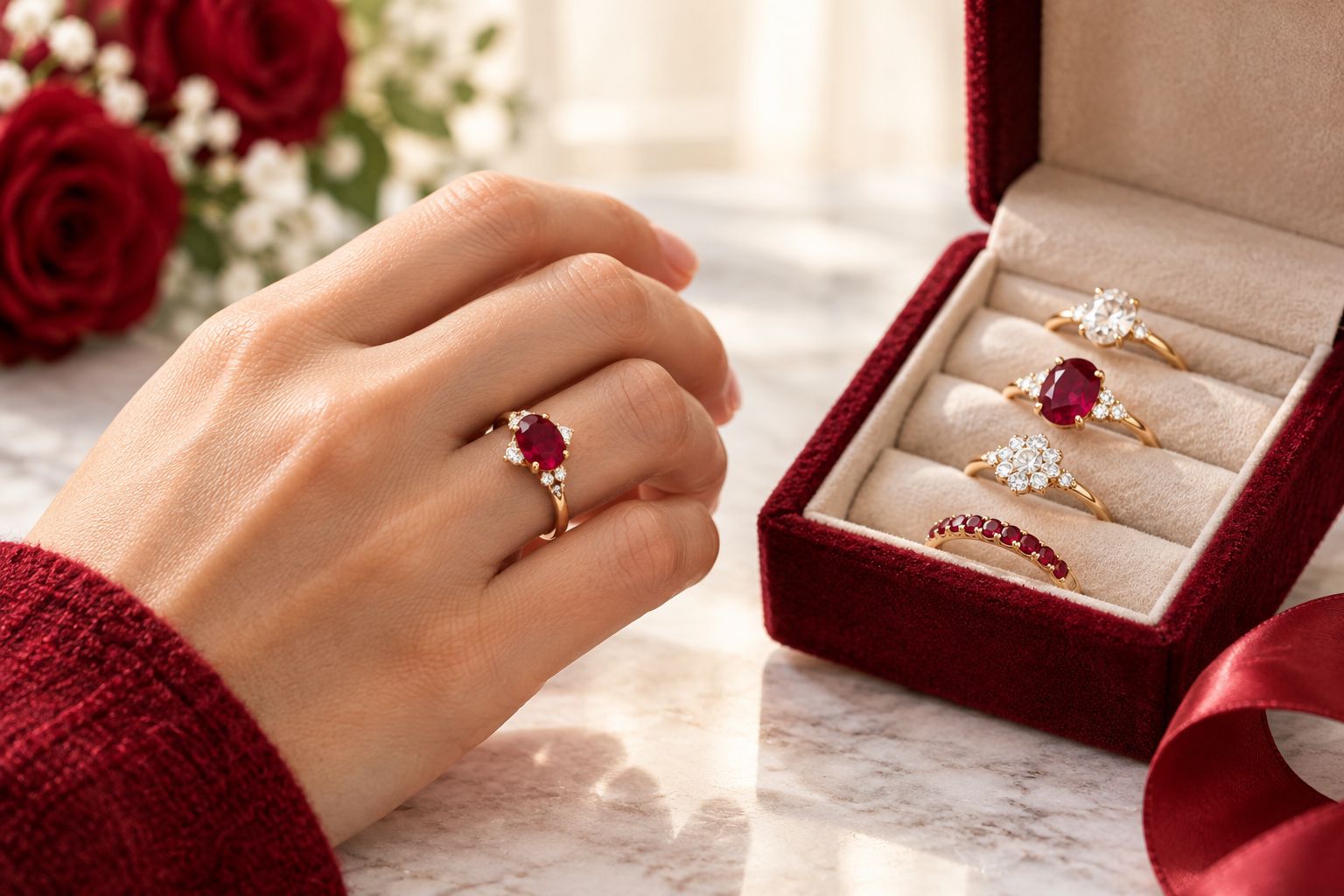
- Solitaire or three-stone settings suit someone who wears one statement ring at a time
- Eternity or stacking bands suit someone who already layers multiple rings on one hand
- Match the metal tone — yellow, rose or white gold — to the pieces she wears most
- Check band width against her current wedding band so the ruby ring doesn't dwarf or disappear next to it
- Note whether she wears rings only for occasions, which opens up bolder halo settings she wouldn't wear daily
If a stacking approach fits better than a single statement piece, styles like the Siren Mall Nugget stacking ring show how a slim band sits against an existing set without competing with it.
Size the ring without giving away the surprise
Sizing is where most anniversary-ring gifts go wrong, because the buyer is guessing instead of measuring.
- Borrow an existing ring worn on the same finger while she's asleep or out, and take it to a jeweller for the internal diameter
- Use a printable ring sizer chart against that borrowed ring rather than against her actual finger
- Ask a discreet family member or close friend who might already know her size
- Buy slightly larger where unsure — rings resize down more easily than up
- Note that full-eternity settings, where stones run all the way around the band, resize with far more difficulty than a solitaire
A retailer like James Patten will size a ruby ring after purchase, which removes the guesswork entirely if home measuring feels too risky.
Check the colour grade before the carat weight
Colour drives ruby value more than size does, and it's the detail most first-time buyers skip.
- Pigeon-blood red — a vivid red with a slight blue undertone — sits at the top of the market
- Lighter pinkish-red stones still qualify as ruby and cost meaningfully less
- A smaller, vivid stone often reads better on the hand than a larger, pale one
- Ask specifically whether the stone is heated — most commercial rubies are, and disclosed heating doesn't meaningfully hurt value
- Undisclosed treatment is the issue to avoid, not treatment itself
Decide between a ready-made ring and a bespoke commission
This decision usually comes down to whether the family already owns a loose or old-set ruby.
- Ready-made rings let you see the exact stone before paying and ship faster
- Bespoke commissions let you re-set a family heirloom ruby into a new mount for the anniversary
- Bespoke work takes longer to turn around than buying a finished piece
- Ready-made rings are easier to compare directly against similar pieces from other retailers
- Commissioning suits couples who already have a stone with sentimental history attached
For a boxier alternative silhouette some buyers prefer over a traditional round or oval mount, a style like the Signature Signet ring shows the kind of proportions a signet-style ruby commission would follow.
Get the ring independently appraised after buying
Appraisal protects resale and insurance value — far more than the box the ring arrives in ever will.
- Request a written appraisal specifically for insurance purposes
- Where possible, get that appraisal from a party separate from the seller for an unbiased valuation
- File the certificate with home insurance documents, not just in the jewellery box
- Re-appraise every few years, since ruby market prices move over time
- Keep in mind that authentication and condition drive resale value — not whether the original presentation box is still around
“A ring's certificate protects its resale value; the box it's presented in doesn't.”
Comparing ruby ring options for a 40th anniversary gift
| Option | Best for | Key limitation |
|---|---|---|
| Solitaire ruby ring | A single statement stone worn daily | Larger, high-clarity rubies can be harder to source in Australia |
| Ruby eternity or stacking band | Pairing with an existing wedding set | Full-eternity settings are slower and harder to resize |
| Ruby and diamond halo ring | More sparkle without a larger ruby | Halo adds cost without adding ruby carat weight |
| Bespoke ruby commission | Re-setting a family heirloom or loose stone | Turnaround is longer than buying a finished ring |
| Ruby signet-style ring | A boxier, less traditional silhouette | Less common shape narrows matching wedding-band options |
Verdict: a solitaire or three-stone ruby ring is the safest 40th anniversary buy for most couples in 2026 — it fits daily wear, resizes easily, and doesn't require the recipient to already own a matching set.
Common mistakes 40th anniversary ruby buyers make
- Buying on carat weight alone. A small vivid pigeon-blood ruby often outperforms a larger pale one in both appearance and resale value.
- Guessing the ring size instead of borrowing a reference. Most post-purchase resizes trace back to a guessed rather than measured size.
- Assuming any red gemstone is ruby. Garnet, spinel and treated glass are common substitutes at the low end — always confirm species, not just colour.
- Treating the presentation box as part of the ring's value. Insurance and resale appraisals are based on the stone and setting, never on packaging.
- Ignoring metal tone against 40 years of accumulated jewellery. A ring in the wrong gold tone gets worn far less often than one that matches.
FAQ
What is the traditional 40th wedding anniversary gemstone?
Ruby is the traditional 40th wedding anniversary gemstone in Australia and most Western gift lists. It also appears on the modern gift-list version for the same year, which makes it one of the few milestones where the two lists agree.
Is ruby or sapphire the correct 40th anniversary stone?
Ruby is correct for the 40th anniversary. Sapphire is commonly associated with the 45th anniversary on most Western gift lists, so the two get confused but sit five years apart.
What colour ruby is most valuable?
Pigeon-blood red — a vivid red with a slight blue undertone — commands the highest value. Lighter pinkish-red stones still qualify as genuine ruby but sell for less.
Does heat treatment lower a ruby's value?
Disclosed heat treatment is standard in the ruby trade and doesn't significantly lower value. Undisclosed treatment is the real problem, since it misrepresents what you're paying for.
Can a ruby ring be worn every day?
Yes. Ruby rates 9 on the Mohs hardness scale, second only to diamond, which makes it durable enough for daily wear when properly set.
Should I buy a ready-made ruby ring or commission a bespoke setting?
Buy ready-made if you want to see the exact stone before paying and need it faster. Commission bespoke if the family already owns a loose or old-set ruby worth re-setting.
How do I size a ruby ring as a surprise gift?
Borrow an existing ring worn on the same finger and have a jeweller measure its internal diameter. Buying slightly larger is safer than guessing small, since rings resize down more easily than up.
Does a ruby ring need its original box to hold its value?
No. Resale and insurance appraisals are based on the stone's authenticity, colour grade and the setting's condition — not on whether the original box survived.
One last thing
Check the actual wedding date before you buy anything. Ruby applies specifically to the 40th year — a couple married in 1986 hits that milestone in 2026, but a couple one year off either side is shopping for a different gemstone entirely, and getting the year wrong is the one mistake a certificate can't fix afterward.


