
Men's wedding bands for grooms come down to three decisions — metal, width and fit — not whatever profile happens to be trending, because this is the one piece of jewellery worn every day for decades. A groom shopping in 2026 needs a band that holds up next to a watch, cufflinks and whatever else he already wears, not just what looks good sitting in a ring dish.
- Men's wedding bands in 2026 favour platinum and white gold in 4mm-6mm widths for grooms who also wear a watch daily.
- Tungsten and titanium bands resist scratches but cannot be resized once machined, unlike gold or platinum.
- Order a groom's wedding band at least 4-6 weeks ahead of the wedding for sizing and engraving.
- Match the band's metal finish to the watch and jewellery a groom already wears, not the trend of the year.
- James Patten's Signature Signet Ring shows how a heavier, engraved piece pairs with a plain wedding band.
Why this matters for grooms
A men's wedding band gets more daily wear than almost anything else a groom owns, bar his watch. It goes through workdays, gym sessions, showers and years of small knocks that an engagement ring, worn in a lower-impact routine, doesn't see in the same way.
Grooms also tend to buy their band later in the process than the engagement ring, often within weeks of the wedding, which leaves less room to fix a sizing or engraving error. If a groom already owns a piece like a family signet ring, that decision is worth making early — men's signet rings follow different sizing and metal rules to a plain band, and wearing both on one hand changes what width actually works.
The other factor unique to grooms: most already wear a watch daily. A wedding band that fights the watch case metal — a rose gold band against a steel-and-white-gold watch, for example — reads as mismatched at exactly the moment a groom is shaking hands and posing for photos. James Patten's fine jewellery range exists partly to solve that pairing problem before it becomes a wedding-day surprise.
“A wedding band that's still a talking point after a year of daily wear was sized, matched or chosen wrong.”
How to choose a men's wedding band as a groom in 2026
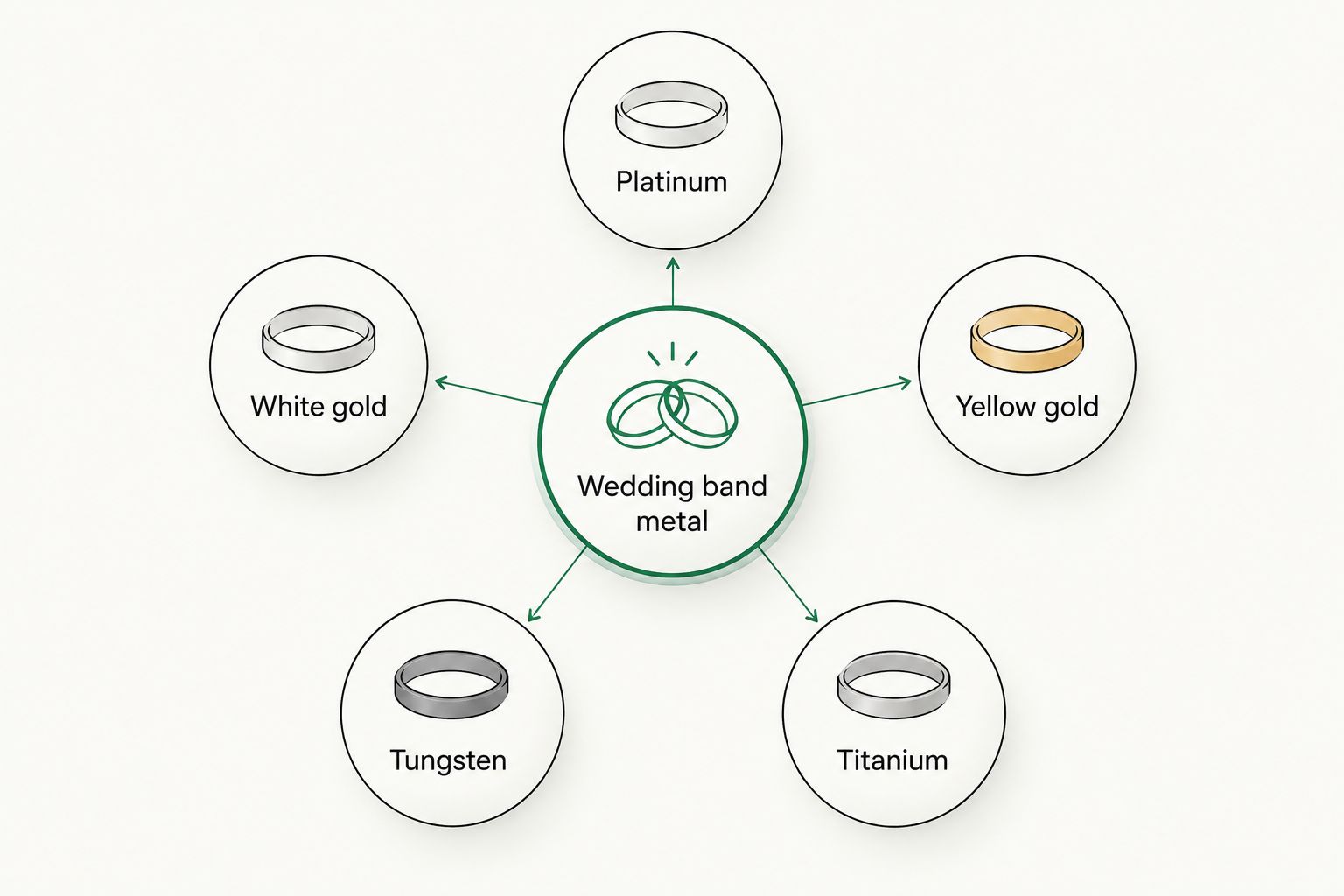
Choose your metal first
Everything else — width, finish, price — depends on this call, so lock it in before browsing profiles.
- Platinum: dense and naturally white, never needs replating, but softer than tungsten so it picks up a brushed patina over years of wear.
- 18k white gold: looks close to platinum at a lower weight, but the rhodium plating wears thin and needs periodic replating to stay bright.
- 18k yellow gold: matches existing yellow gold jewellery and most classic dress watches, though the alloy scratches faster than platinum.
- Tungsten carbide: sits near 9 on the Mohs hardness scale, resisting scratches better than any precious metal, but it can't be resized or engraved once machined.
- Titanium: roughly half the weight of gold for the same size, hypoallergenic, but finish and engraving options are more limited.
Decide on width and profile
Most men's wedding bands run 4mm to 8mm wide, and the width changes how the band sits against a watch strap or bracelet every day.
- Under 5mm: sits cleanly under a watch bracelet clasp and most cuffs, the safest pick for grooms who wear a watch daily.
- 6mm to 7mm: the most common range for a standalone statement without crowding neighbouring fingers.
- 8mm and above: reads as a deliberate style choice, works best on larger hands and with minimal other jewellery.
- Flat court: flat outside, rounded inside, the most comfortable profile for daily wear.
- D-shape: rounded outside, a more traditional look with slightly more bulk.
- Comfort-fit: curved inside so the band moves more freely over the knuckle.
Match your existing jewellery and watch
A band chosen in isolation almost always looks wrong next to what a groom already wears daily.
- Steel or two-tone watch: a white metal band, platinum or white gold, reads as one family of metal.
- Yellow or rose gold watch: a matching or complementary gold tone avoids a jarring mix.
- Existing signet ring or family piece: check finger placement and width before ordering, since two rings on one hand change what looks proportionate. James Patten's Signature Signet Ring is a useful reference for how a heavier, engraved piece sits against a plain band on the adjacent finger.
- No other jewellery worn: a plain, mid-width band in a neutral metal is the safest long-term choice.
Get the right fit
Ring size mistakes are the single most common wedding-band complaint, and most of them trace back to when the finger was measured.
- Measure late in the day, when fingers are at their largest from normal daily swelling.
- Measure at room temperature, not right after exercise or in cold weather.
- Use the Australian letter-based sizing scale, A through Z with half sizes, rather than converting from a US or UK number by guesswork.
- Account for width: a wider band needs sizing slightly larger than a thin band to fit the same finger.
- Confirm the retailer's resizing policy in gold or platinum before ordering — tungsten and titanium generally can't be resized at all.
Decide on finish and engraving
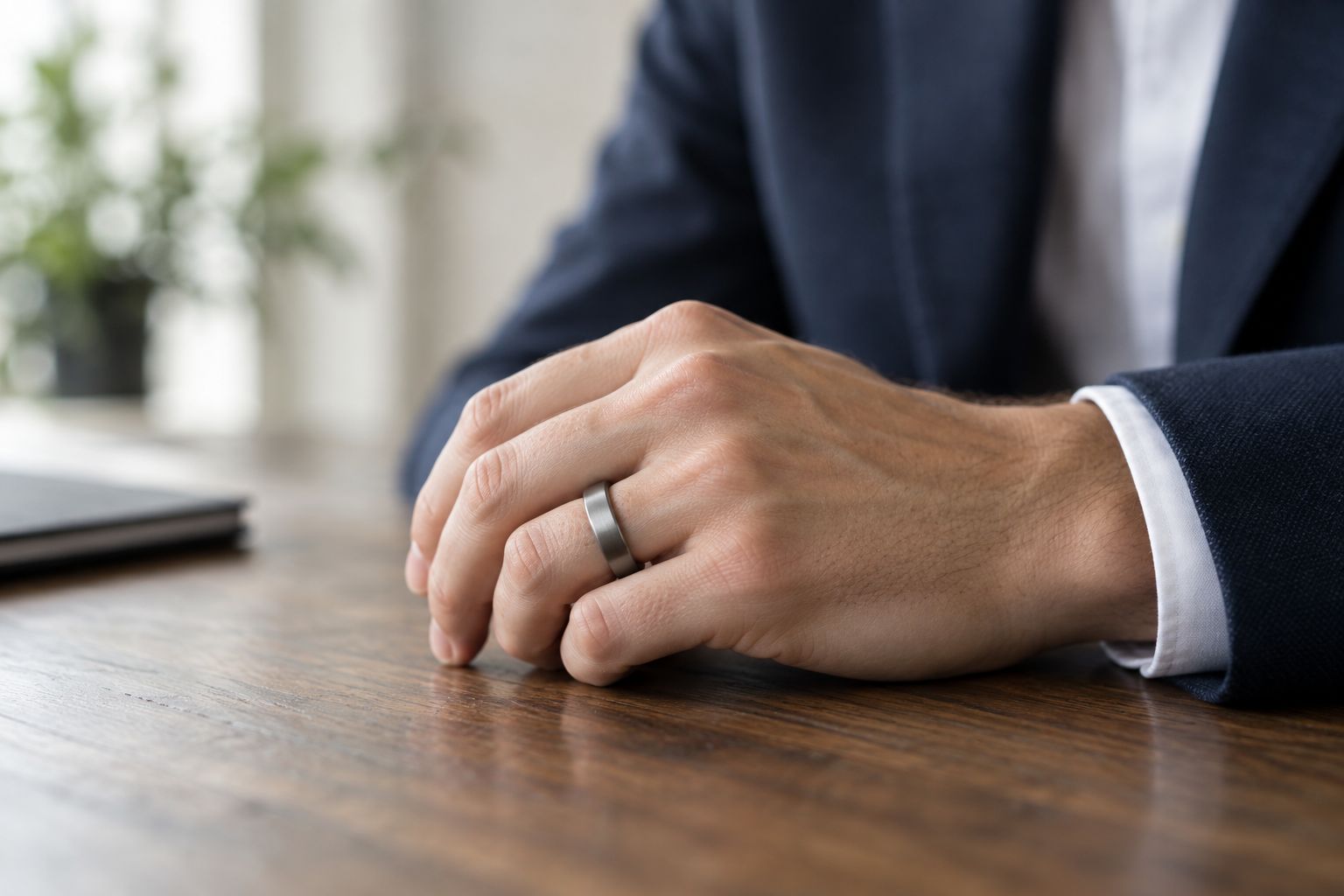
- Polished: the most common finish, shows scratches over time but polishes back up easily on gold and platinum.
- Brushed or matte: hides everyday scratches better, suits grooms who work with their hands.
- Hammered: a textured finish that disguises wear almost entirely, less common but durable in appearance.
- Inside engraving: a date, initials or short phrase, usually limited to a set number of characters depending on band width.
- Outside detailing: milgrain edges, a single line of channel-set diamonds, or a contrasting metal inlay for grooms who want more than a plain band without going to a full statement piece.
Set a realistic budget
Price on a men's wedding band moves with three things: metal type, width and any stone setting or engraving detail. A wider platinum band with diamond detailing costs meaningfully more than a narrow tungsten band, purely on materials and labour. Check current pricing directly with the retailer rather than working from a figure seen elsewhere, since metal prices move through the year.
Buy from a source you trust
- Ask to see the metal purity stamp on the band itself — 750 for 18k gold, 950 for platinum — before paying.
- Confirm resizing and warranty terms in writing, not just verbally at the counter.
- Buy engraving as part of the original order where possible; adding it later can be harder to match to the band's finish.
- Check the retailer's return and exchange policy before the wedding date, not after.
Wedding band options compared
| Option | Best for | Key limitation |
|---|---|---|
| Platinum | Grooms who want a naturally white metal that never needs replating | Softer than tungsten, develops a brushed patina over years |
| 18k white gold | Grooms who want platinum's look at a lower weight | Rhodium plating wears thin and needs periodic replating |
| 18k yellow gold | Grooms who already wear yellow gold jewellery or a gold watch | Alloy scratches faster than platinum or tungsten |
| Tungsten carbide | Grooms who want maximum scratch resistance for manual work | Cannot be resized or engraved once machined |
| Titanium | Grooms who want a lightweight, hypoallergenic band | Limited engraving depth and fewer finish options |
Common mistakes grooms make
- Ordering the band in the final week before the wedding, leaving no time to fix a sizing or engraving error.
- Choosing tungsten or titanium without knowing it can't be resized if weight or finger size changes later.
- Picking a wide statement band without testing it against the watch worn daily — clearance under a bracelet clasp matters more than it looks in a ring dish.
- Matching the band to the engagement ring's metal instead of the groom's own daily jewellery and watch.
- Skipping the purity stamp check and taking a seller's word on metal content instead of verifying it on the band itself.
FAQ
What's the best metal for a men's wedding band?
There's no single best metal — platinum and 18k white gold suit grooms who want a low-maintenance white metal, while tungsten carbide suits grooms prioritising scratch resistance over resizing flexibility. The right call depends on daily wear, work environment and what else the groom already wears.
How wide should a men's wedding band be?
Most men's wedding bands run 4mm to 8mm wide, with under 5mm the safest choice for grooms who wear a watch bracelet or cuffs daily. Wider bands from 6mm up read as a deliberate style statement and suit larger hands.
Is tungsten or platinum better for a wedding band?
Tungsten carbide resists scratches better than any precious metal but cannot be resized or engraved once machined, while platinum can be resized, replated and engraved throughout its life. Grooms expecting their finger size to change should lean toward platinum.
How much does a men's wedding band cost in 2026?
Cost depends on metal, width, engraving and any stone setting, so figures vary widely between a plain tungsten band and a wide platinum band with diamond detailing. Check current pricing directly with the retailer rather than relying on a figure quoted elsewhere.
Should a groom's wedding band match his watch?
Matching the band's metal tone to the watch case avoids an obvious clash in photos and daily wear — steel or two-tone watches pair with white metal bands, gold watches pair with matching gold tones. James Patten Fine Watches curates fine jewellery and watches together for exactly this kind of pairing.
Can a men's wedding band be resized later?
Platinum, 18k white gold and 18k yellow gold bands can generally be resized by a jeweller, though wider bands and heavily engraved pieces have more limits. Tungsten and titanium bands typically cannot be resized at all once machined.
What ring size chart does Australia use?
Australian ring sizing runs on a letter scale from A to Z, with half sizes in between, rather than the numeric scales used in the US. Getting sized locally on the actual band width being ordered avoids conversion errors from a US or UK chart.
Is titanium a good choice for a men's wedding band?
Titanium is roughly half the weight of gold for the same size and is hypoallergenic, which suits grooms who find heavier metals uncomfortable. The trade-off is fewer finish and engraving options compared with gold or platinum.
One last thing
Tungsten and titanium bands can't be cut off with a standard ring cutter in an emergency — hospitals and jewellers need specialised carbide or diamond-tipped tools, and some tungsten bands have to be shattered with pliers rather than cut, because the metal is hard but brittle rather than soft and bendable like gold. If a groom's job involves machinery, sport or manual work where a ring might need to come off fast, that's a genuine safety factor to weigh against tungsten's scratch resistance, not just a resale afterthought. For grooms building a fine jewellery and watch collection with James Patten over the years ahead, 2026 is as good a year as any to start with a band chosen for the next decade of wear, not the wedding photos.


