
Engineering-minded collectors buy the IWC Ingenieur for its antimagnetic movement architecture, not for a dial story. IWC Schaffhausen built the Ingenieur in 1955 as a tool watch for people who worked near equipment that could throw off an ordinary mechanical movement — lab technicians, engineers, anyone whose job sat next to a magnetic field. The line has been redesigned twice since, most recently in 2023, and each generation reads differently depending on whether you value vintage design pedigree or current-production reliability.

- IWC Ingenieur is IWC's antimagnetic engineering watch, rebuilt in 2023 with a fully integrated bracelet.
- The 1976 Gerald Genta-designed Ingenieur SL is the reference vintage-engineering collectors chase for its case-bracelet integration.
- Reference correctness and movement health matter more than box and papers when grading an IWC Ingenieur.
- The 2023 Ingenieur Automatic 40 is the easiest reference to verify and service for a first purchase in 2026 - Buy.
Why the IWC Ingenieur matters for engineering-minded collectors
The Ingenieur sits in a specific lane of the watch market: buyers who care why a watch works, not just how it looks on the wrist. That's a different profile from someone shopping a Rolex Submariner or a Cartier Tank — the Ingenieur buyer wants a documented reason the watch resists magnetism, and wants the movement architecture to back that claim up. For a wider look at where IWC sits against its peers, the best IWC watches for collectors guide covers the full catalogue.
Engineering-minded collectors research movement calibers before dial colours, ask about case construction before straps, and treat service history as the primary value signal rather than packaging. That's consistent with how James Patten Fine Watches grades a piece like this: reference correctness, originality, condition, movement health, service evidence and independent authentication are what actually separate a strong IWC Ingenieur from a risky one — not what's sitting in the box.
“A box cannot be worn, and it doesn't tell you anything about how the movement runs.”
The IWC Ingenieur buying process for engineering-minded collectors
Learn what "antimagnetic" actually means on this watch
The Ingenieur's core engineering idea has stayed consistent since 1955: shield the escapement and balance wheel from outside magnetic fields with a soft-iron inner case, so the watch keeps time near motors, speakers and medical equipment that would throw off an ordinary mechanical movement.
- Ask whether the reference uses a full soft-iron inner cage or a partial shield
- Check whether the case-back construction matches documented specifications for that generation
- Confirm the escapement components are non-ferrous where the reference calls for it
- Have any magnetic-field testing done by a specialist, never by yourself, on a valuable piece
- Read the movement's own documentation rather than relying on dial text alone
Verify which generation you're buying
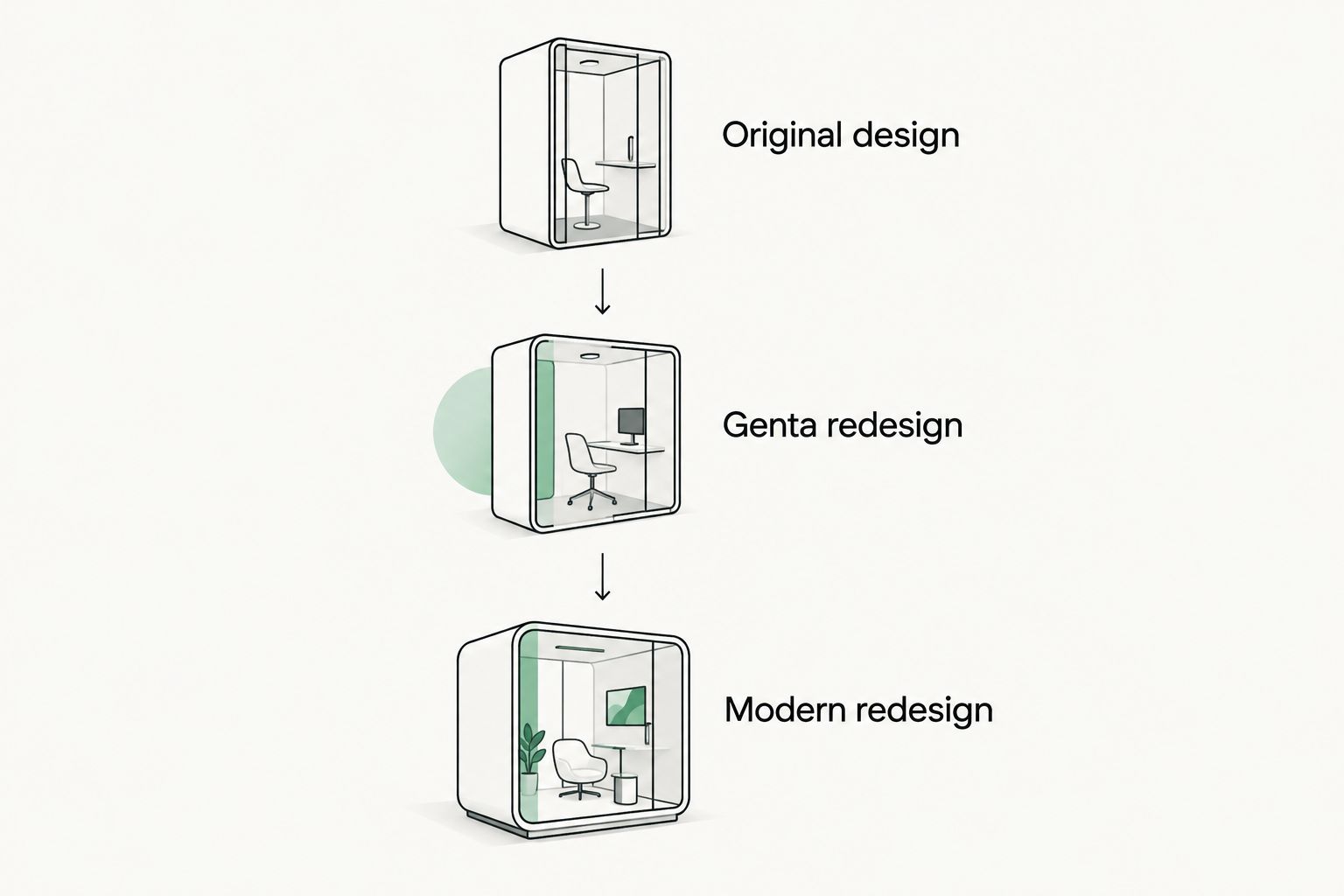
Three Ingenieur eras drive almost all collector interest: the original 1955 tool-watch design, the 1976 Gerald Genta-designed Ingenieur SL with its integrated bracelet, and the current generation, redesigned in 2023 with an updated case and bracelet. Genta drew the Ingenieur SL the same year he sketched the Nautilus for Patek Philippe — a detail most sellers won't mention.
- Match the case shape and lug design to verified photos of that specific generation
- Confirm the bracelet is the correct integrated type for the era, not a swapped-in strap
- Check that the reference number on the case back matches the expected range for that generation
- Compare dial text, font weight and logo placement against confirmed examples
- Ask for the movement caliber and confirm it's correct for the production year
Assess movement health and service evidence
A watch built to resist magnetic interference still needs the same mechanical checks as any other automatic movement — arguably more, since a compromised movement defeats the entire point of the design.
- Request any available service records, but treat their absence as a question, not a disqualifier
- Check that the power reserve holds close to its rated duration on a full wind
- Watch the date changeover at midnight for a clean, instant jump
- Time the watch across 24 hours and compare drift against normal mechanical tolerance
- Ask for case-back photos and look for moisture marks or corrosion
- Confirm the movement serial is consistent with the case serial and reference
Grading a piece like this needs a consistent framework rather than a gut feel — the luxury watch condition grading guide sets out the criteria dealers actually use.
Check the case and integrated bracelet
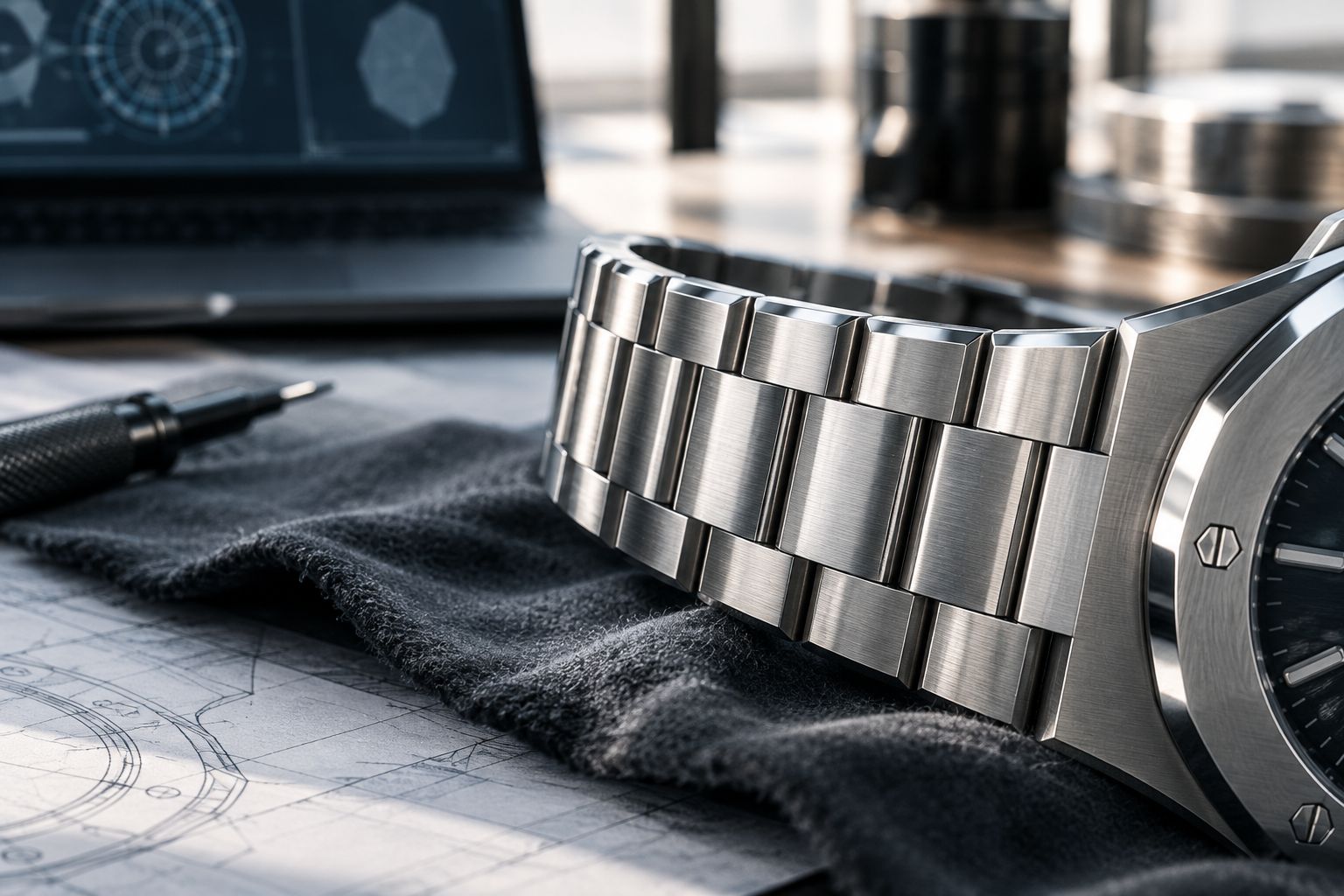
The Ingenieur's bracelet is part of its engineering, not an accessory — a stretched link or a mismatched screw changes how the entire watch sits on the wrist.
- Inspect brushed-to-polished finish transitions for sharpness; rounded edges suggest heavy polishing
- Flex the bracelet gently to check for looseness in the links
- Confirm bezel screws, where present, are original and undamaged
- Check the crown and crown guard for wear consistent with the watch's stated age
- Inspect the case-back gasket area for signs of amateur opening
Authenticate independently before you commit
Authentication is the step engineering-minded buyers should trust the least when it comes from the seller alone.
- Cross-check the reference number against documented production ranges for that generation
- Verify the movement serial against the case, not just the paperwork that comes with it
- Get a third-party appraisal from someone with no financial stake in the sale
- Treat a price well under the going range as a reason to slow down, not a reason to hurry
- Buy from a dealer that authenticates before listing rather than after a complaint
The faster path is working with a specialist pre-owned dealer that runs this authentication process before a watch ever reaches the site — see how to buy a luxury watch online in Australia for what that process should look like.
Decide between new and pre-owned
- Compare current boutique allocation waits against pre-owned availability
- Weigh warranty coverage on new pieces against the lower cost of entry on pre-owned
- Consider your comfort with visible wear versus first-owner condition
- Check resale liquidity for the specific reference before committing capital
- Match your budget to a generation you'd genuinely wear daily, not just the newest release
Compare IWC Ingenieur references for engineering-minded collectors
| Reference | Best for | Key limitation |
|---|---|---|
| Ingenieur SL (1976, Genta) | Vintage-engineering purists chasing case-bracelet integration | Scarcer supply, harder to verify complete original bracelet links |
| Ingenieur Automatic 40 (2023) | First-time IWC Ingenieur buyers wanting the current design | Newer platform with a shorter independent service track record |
| Ingenieur Chronograph 42 (2023) | Collectors wanting more wrist presence and a complication | Larger case, less versatile across daily rotation |
| Rolex Milgauss | Buyers comparing antimagnetic sports watches across brands | Different design language, no integrated bracelet |
Verdict: the 2023 Ingenieur Automatic 40 is the reference to buy first if you're building your first engineering-focused collection; the 1976 SL is the reference to chase once you understand what you're authenticating.
Talk through your IWC Ingenieur options
Get guidance on reference selection and authentication before you commit.
Common mistakes engineering-minded collectors make
- Assuming every IWC Ingenieur generation carries the same magnetic-resistance rating — it varies by era and reference
- Treating a missing box or papers as a value problem instead of checking the movement, case and reference correctness directly
- Comparing 2023 Ingenieur pricing and specification directly against 1976 Genta references as if they belong to the same collecting category
- Skipping independent authentication because a seller looks established
- Buying the Chronograph 42 for the complication, then rarely using the chronograph function day to day
FAQ
What is the IWC Ingenieur known for?
The IWC Ingenieur is known for antimagnetic movement protection, using a soft-iron inner case to shield the escapement and balance wheel from magnetic fields. IWC launched the design in 1955 for engineers and technicians who worked near equipment that could disrupt an ordinary mechanical watch.
Is the IWC Ingenieur antimagnetic?
Yes, antimagnetic protection is the Ingenieur's defining engineering feature across every generation. The level of shielding and the exact construction vary by reference, so confirm the specification for the specific generation you're buying.
What's the difference between the 1976 Ingenieur SL and the 2023 Ingenieur Automatic?
The 1976 Ingenieur SL is a Gerald Genta design with an integrated bracelet from the era that also produced the Patek Philippe Nautilus. The 2023 Ingenieur Automatic is a modern redesign with an updated case and bracelet and a shorter independent service history.
Is the IWC Ingenieur a good investment watch?
The Ingenieur's investment case rests on reference scarcity, design pedigree and documented condition rather than any guaranteed return. The 1976 Genta-designed SL carries the strongest collector story of the family, but condition and authenticity drive value more than the reference name alone.
Does an IWC Ingenieur need its box and papers to be valuable?
No. A box cannot be worn and doesn't affect how the movement runs, so it isn't a reliable value signal. Reference correctness, originality, condition, movement health and independent authentication carry far more weight when grading an Ingenieur.
How do you authenticate a pre-owned IWC Ingenieur?
Cross-check the case reference number against documented production ranges, verify the movement serial matches the case, and get a third-party appraisal from someone with no stake in the sale. Buy from a dealer that authenticates before listing rather than after a dispute.
What case size is the current IWC Ingenieur?
The 2023 redesign includes an Automatic 40 and a Chronograph 42, named for their approximate case diameters in millimetres. Earlier generations, including the 1976 Genta-designed SL, use different case proportions specific to that era.
Is the IWC Ingenieur or the Rolex Milgauss the better buy for an engineering-minded collector?
Both are antimagnetic sports watches, but they solve the problem differently: the Ingenieur uses an integrated bracelet and a soft-iron inner case, while the Milgauss uses a different case construction and no integrated bracelet. The better buy depends on whether integrated-bracelet design or Rolex's build language matters more to you.
One last thing
Gerald Genta designed the 1976 Ingenieur SL the same year he was sketching the Nautilus for Patek Philippe — two watches built on completely different engineering premises, one for shock absorption at sea and one for magnetic shielding on land, from the same drafting table in 2026 collecting circles that still trade on that story. If you're new to the family, start with the 2023 Ingenieur Automatic 40 rather than a vintage SL: it's easier to verify, easier to service, and gives you a baseline for what the design is meant to do before you take on a harder-to-authenticate vintage piece.
Related guides


