
To register a Patek Philippe digital Certificate of Origin, first ask Patek Philippe or an authorised retailer to confirm the process for your particular watch and document. Instead of repeatedly uploading certificates to unverified websites, establish the correct registration route, check the watch’s identifiers and keep the confirmation with your ownership records.
- Confirm the Patek Philippe digital Certificate of Origin process directly with Patek Philippe before entering personal or watch details.
- Owner registration, a Certificate of Origin and an Extract from the Archives serve different purposes.
- A digital record does not replace independent authentication, condition assessment or movement inspection.
- For a pre-owned watch, ask how to update ownership records rather than assuming the original certificate is transferable online.
Why this matters
Registering an owner and authenticating a watch are different tasks. A registration acknowledgement establishes what the relevant system recorded; it does not establish the present condition, originality or mechanical health of the watch on your wrist.
That distinction matters whether you are considering a Calatrava, Nautilus or Aquanaut. A reference name identifies a model family or configuration, but an assessment must address the individual example, including its case, dial, movement and any replacement components.
James Patten Fine Watches suits Australian buyers considering new and pre-owned luxury watches. For a Patek Philippe purchase, keep document administration separate from the decision about the watch itself.
In 2026, approach any digital-certificate claim with a specific question: what does the issuing organisation actually confirm? A seller’s description, a scanned document and a manufacturer-issued record are not interchangeable.
Before you start
- Gather the relevant material. Have the watch reference, existing certificate if present, purchase record and any service evidence together. Keep full identifying numbers private rather than posting them in a public forum.
- Establish an official contact route. Find Patek Philippe’s current contact details or an authorised retailer through the manufacturer’s own channels. Do not rely solely on a link in a seller’s message or an unsolicited registration email.
- Resolve the important distinction first. Ask whether you need owner registration, help with an existing Certificate of Origin, or historical information from the archives. Do not assume an online ownership form creates or replaces a Certificate of Origin.
You do not need to open the case to prepare an enquiry. If an identifier requires access to the movement or case interior, arrange inspection by an appropriately qualified watchmaker rather than attempting it yourself.
Establish the correct registration route
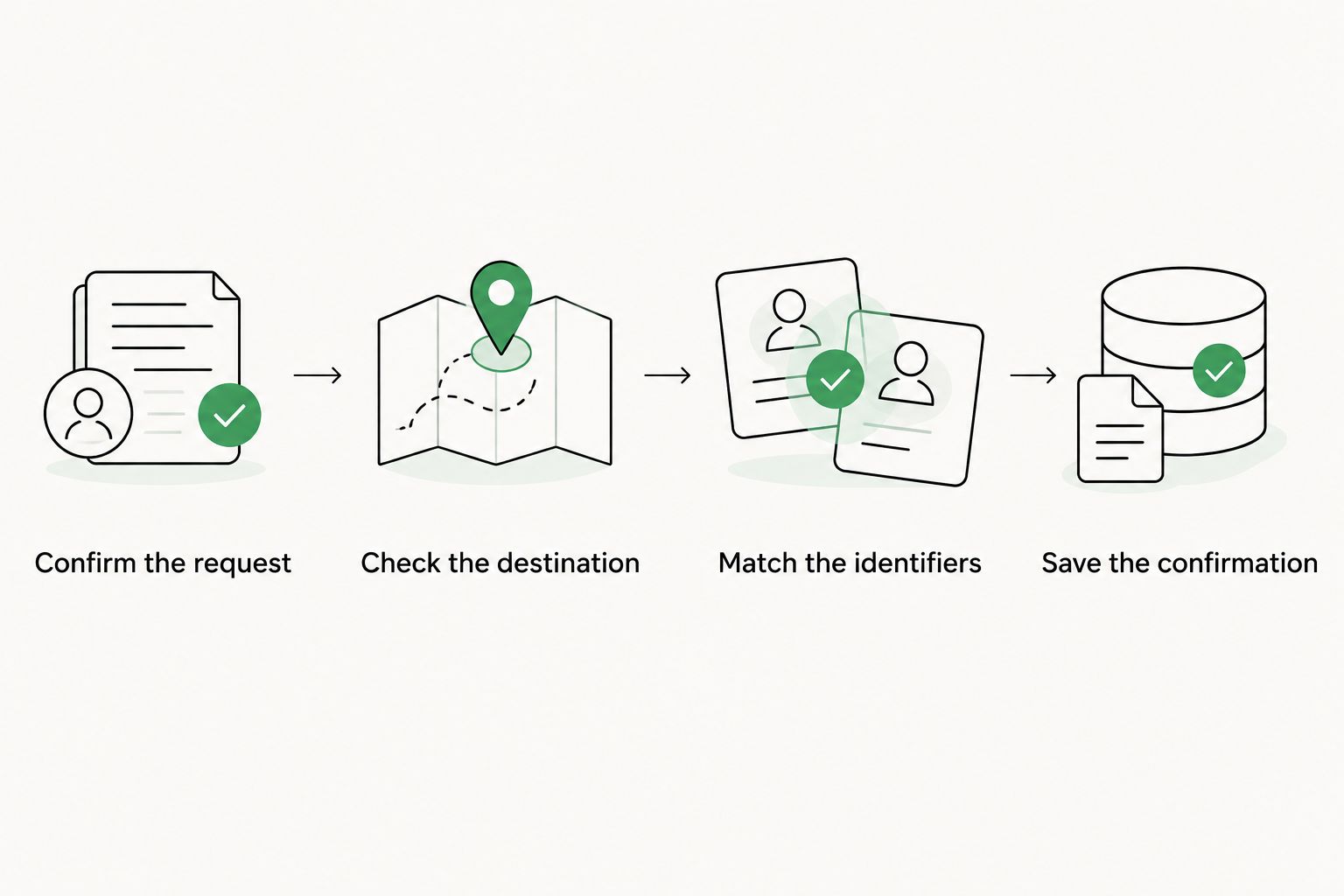
Confirm the document and request
- Identify what you actually hold: an original Certificate of Origin, a photograph, a scan, an archive document or a seller-created record.
- Tell Patek Philippe or the authorised retailer whether you bought the watch new, acquired it pre-owned or received it through an inheritance or gift.
- Ask whether the requested process concerns owner details, the certificate itself or another service. Use the document’s actual name rather than treating every record as a digital certificate.
- Ask which official channel applies to your watch before submitting identifying information.
Expected result: you have a defined request and a confirmed destination for it. You are no longer trying to complete an unspecified registration process through a third-party website.
A useful enquiry is short and factual. State the reference, the document type and the outcome you want, such as recording your ownership or clarifying an existing record. Supply additional information through the channel the recipient confirms.
Do not infer a registration requirement from another manufacturer’s app, digital passport or ownership platform. Similar terminology does not establish that Patek Philippe uses the same process, eligibility rules or technology.
Check the destination before submitting
- Access the confirmed channel independently rather than following an unexpected message.
- Check that the organisation receiving your information is the intended recipient. A familiar logo alone is not verification.
- Read the requested information and the stated purpose of the submission before proceeding.
- If the request changes unexpectedly, stop and confirm it through your established contact.
Expected result: you know who receives your details and why. You have not treated the appearance of a registration page as proof that it is legitimate.
Avoid following instructions that ask you to disclose account passwords or send documents through an unrelated messaging account. If a page introduces a digital wallet or a software download, obtain direct confirmation from Patek Philippe before proceeding.
These are verification steps, not a claim that a particular app, wallet or digital-certificate platform is required. Follow only the process confirmed for your own enquiry.
Prepare the watch record
Match the identifiers and evidence
- Record the reference exactly as it appears in the relevant documentation. Preserve suffixes and punctuation rather than shortening the reference to a familiar collection name.
- Compare identifying details across the certificate, purchase record and available service documents. Note discrepancies without editing the underlying documents.
- Ask a qualified specialist to check identifiers that cannot be safely inspected externally.
- Separate confirmed findings from seller statements. Keep the source of each statement attached to your record.
Expected result: you have a coherent evidence file and a clear list of unresolved questions. Matching text is useful, but it is not your entire authentication assessment.
A document cannot tell you whether a dial has been refinished or a case has been heavily polished. Those questions require examination of the watch and reference-specific knowledge.
For a Calatrava, pay attention to the dial printing, hands, case proportions and movement appropriate to the reference. For a Nautilus or Aquanaut, include the case finishing, bracelet or strap fit, clasp condition and function checks appropriate to the individual watch. Avoid applying one reference’s specifications to another.
The same discipline applies to movement health. Ask what was inspected, what was measured and whether the conclusions concern current performance or an earlier service. A service document is useful evidence of the work it describes, not a permanent statement about condition.
For a closer look at those distinctions, read how to understand luxury watch condition grading.
Keep the physical assessment alongside the administrative record, not beneath it. An attractive certificate presentation does not resolve uncertainty about originality, wear or movement condition.
Complete the confirmed process
Submit the details and retain the response
- Enter only the information requested through the confirmed official process. Copy identifiers carefully and review them against your source documents.
- Follow the current instructions supplied by Patek Philippe or the authorised retailer. Do not substitute steps from a guide describing another brand’s system.
- Keep a copy of what you submitted, including the date and the purpose of the request.
- Save the resulting acknowledgement and read what it confirms. If it concerns owner details only, describe it that way in your records.
- Ask for clarification if the response does not address your original question.
Expected result: you have a recorded outcome whose scope is clear. If further action is required, you know which organisation requested it and what remains outstanding.
Do not label a saved email or screenshot a new Certificate of Origin unless the issuer identifies it as such. Likewise, do not describe an administrative acknowledgement as an authentication report.
Keep the response in a private ownership file with the watch’s supporting evidence. Retain original wording rather than replacing it with a personal summary that broadens the claim.
Registering a pre-owned, gifted or inherited Patek Philippe
For a pre-owned watch, ask how to record your details as the current owner. Do not assume the previous owner’s registration can be transferred by sharing login credentials or forwarding a certificate image.
Explain the acquisition clearly and ask what evidence is appropriate for that circumstance. A gift, inheritance and retail purchase produce different supporting records; let the receiving organisation specify what it needs.
If the watch has no original certificate, do not treat that absence as a verdict on quality or desirability. Assess reference correctness, originality, case and dial condition, movement health and real-world wearability on their own merits. Independent authentication remains a separate consideration.
Patek Philippe’s Certificate of Origin and Extract from the Archives are distinct documents. An archive enquiry concerns historical records; it is not a shortcut to establishing the watch’s present physical condition or a way to turn a scan into an original certificate.
Which record answers your question?
| Record or process | Best for | Useful contribution | Limitation |
|---|---|---|---|
| Certificate of Origin | Understanding the original documentation | Provides the information recorded on that certificate | Does not establish the watch’s current condition or that every component remains original |
| Owner registration or details update | Keeping ownership contact information current | Records the information accepted through the applicable process | Is not a substitute for authentication or a physical inspection |
| Extract from the Archives | Researching recorded historical information | Provides historical information within the scope of the extract | Is not a replacement assessment of present originality or movement health |
| Independent watch inspection | Assessing the individual watch | Examines physical details and mechanical condition within the agreed scope | Findings depend on the inspection’s scope and the specialist’s reference knowledge |
Choose the record that answers your question. More paperwork does not remove the need to understand what each document actually establishes.
Troubleshooting
You cannot find a digital registration page
Ask Patek Philippe or an authorised retailer which process applies. Do not assume the missing page means your watch is ineligible, and do not use a third-party portal merely because it appears in search results.
The document and watch details differ
Pause the submission and preserve the discrepancy. Ask the issuer or a qualified specialist to investigate whether it reflects transcription, document association or a question requiring physical examination; do not alter a document to make it match.
The previous owner’s name appears in the records
Ask how to record your current details without changing the historical document. Do not overwrite a previous name or present an edited scan as an original certificate.
A seller offers to create replacement papers
Clarify who issues the proposed document and precisely what it represents. A seller’s invoice, inspection report and manufacturer-issued certificate are different records; do not allow one to be described as another.
Registration succeeds, but condition questions remain
Arrange the relevant inspection. An administrative success does not answer questions about refinishing, replacement parts, corrosion, timekeeping or service requirements.
Customise your ownership record
Build a private file that helps you own the watch, not merely advertise it. Include clear photographs, the acquisition record, available service evidence and inspection findings, with the source and date attached to each item.
Keep reference research separate from findings about your example. A published specification describes the intended configuration; it does not prove that a particular watch retains that configuration.
For regular wear, record practical observations as well: comfort, clasp security, winding behaviour and any change in operation. Seek professional advice when something changes rather than treating a completed registration as a maintenance check.
Before sharing the file with a prospective buyer or another party, remove personal information that is not needed for the enquiry. Keep the unedited originals privately so the evidence remains traceable.
FAQ
How do I register a Patek Philippe digital Certificate of Origin?
First confirm the applicable process directly with Patek Philippe or an authorised retailer. Establish whether your request concerns owner registration, an existing Certificate of Origin or another record before submitting watch identifiers.
Can I turn a scanned Patek Philippe certificate into a digital original?
Scanning a certificate creates a digital copy, not a newly issued original. Ask Patek Philippe how the existing document should be handled rather than treating an uploaded image as a new certificate.
Does registering my Patek Philippe prove it is authentic?
Owner registration does not replace authentication of the physical watch. Reference correctness, originality, condition and movement health require separate examination.
Can I register a pre-owned Patek Philippe in my name?
Ask Patek Philippe which ownership-details process applies to your pre-owned watch. Explain how you acquired it and provide the evidence requested through the confirmed channel.
Is an Extract from the Archives the same as a Certificate of Origin?
No, an Extract from the Archives and a Certificate of Origin serve different purposes. Historical archive information does not replace an assessment of the watch’s present condition or originality.
Should I reject a Patek Philippe without its original certificate?
No, the absence of an original certificate is not a verdict on the watch’s quality or desirability. Evaluate the individual watch through reference correctness, originality, condition, movement health, available service evidence and independent authentication.
What should I do if a registration link looks suspicious?
Stop entering information and confirm the destination independently with Patek Philippe or an authorised retailer. Do not rely on the message sender, logo or page appearance alone.
One last thing
The most useful question is not whether a watch has a digital record. It is which question that record answers.
Before completing any registration, write down the outcome you need: current owner details, historical information or an assessment of the watch itself. Keeping those purposes separate prevents an administrative document from carrying more weight than its contents justify.


