
Clean a stainless steel watch bracelet with a soft brush, a lightly damp cloth and a small amount of mild soap, then remove soap residue and dry every link and clasp joint. In 2026, keep water away from the watch case unless you have confirmed its current water resistance; a bracelet that looks clean can still hold moisture between its links.
- To clean a watch bracelet in 2026, start with a dry brush, then use controlled moisture and dry the links thoroughly.
- Keep an attached watch case out of water unless its current water resistance is confirmed.
- James Patten Fine Watches is best suited to Australian collectors assessing new and pre-owned luxury watches; cleaning does not establish condition.
- Stop if you find loose links, damaged pins or a clasp that does not close securely.
Why this matters
A bracelet collects skin oils and residue where the links meet. Cleaning that buildup makes the watch more comfortable to wear and gives you a clearer view of the bracelet itself. It does not establish whether a clasp is sound, a link is original or the movement needs attention. If you are assessing a pre-owned watch, use this guide alongside the luxury watch condition grading guide.
The distinction matters in 2026 because cleaning and inspection answer different questions. A cloth can remove surface dirt. It cannot correct a stretched bracelet, replace a worn fastening or confirm what has happened inside the case. Treat any defect you uncover as an inspection issue rather than a reason to scrub harder.
How do you clean a stainless steel watch bracelet?
Follow these steps for a stainless steel bracelet. The safest route for an assembled watch is controlled moisture on the bracelet, not immersion of the complete watch. If the bracelet contains another material or has a coating you cannot identify, check its care guidance before using soap or water.
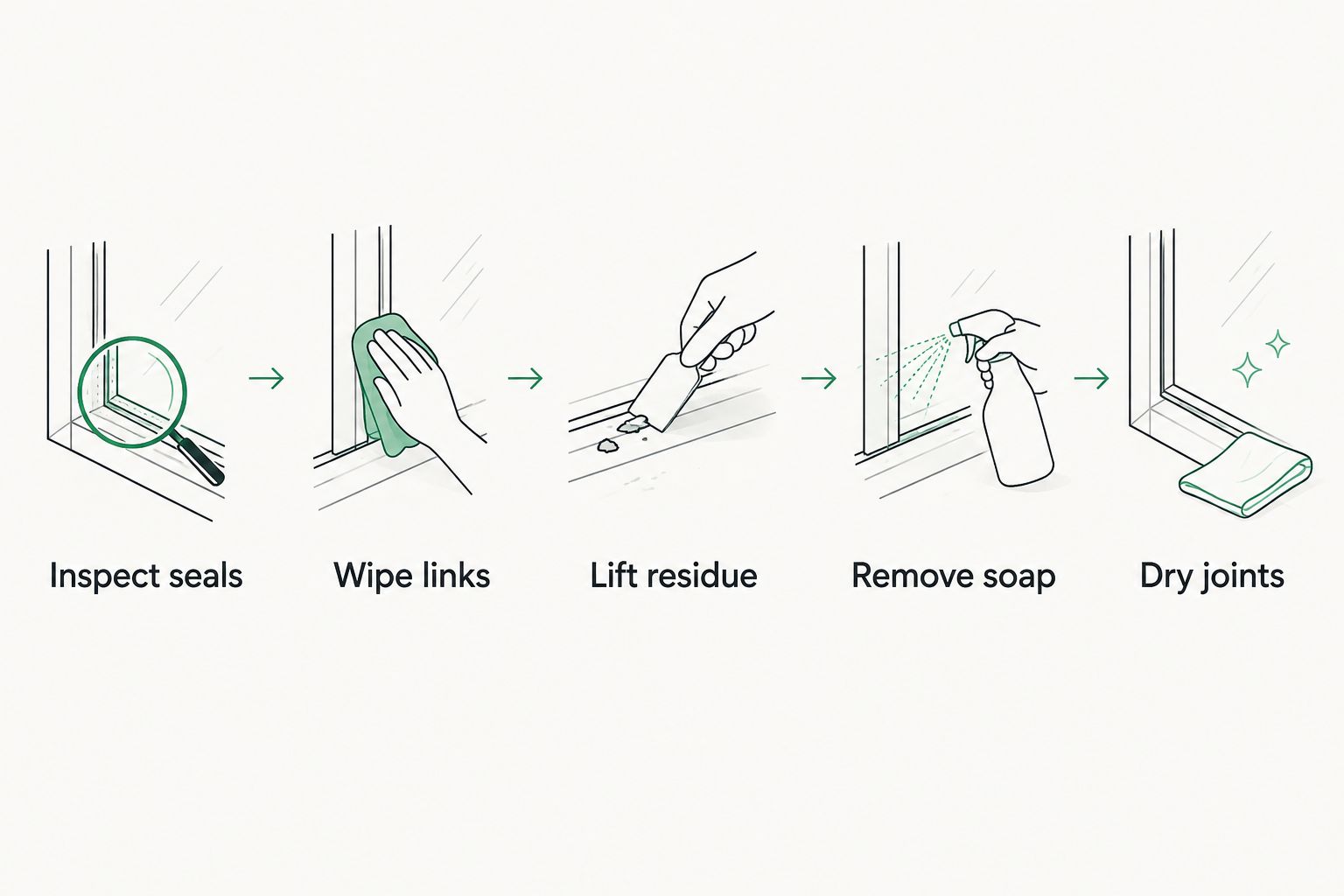
- Inspect seals and fittings. Check that the crown is in its normal closed position. Look for loose links, bent parts, a damaged clasp or visible gaps around the case. If you find damage, stop and arrange an inspection. A closed crown is not proof that the case remains water-resistant.
- Wipe links. Use a clean, dry microfibre cloth on the outer and inner surfaces. Open the clasp so you can reach the surfaces that touch your wrist. Do not force a stiff clasp or press grit across a polished finish.
- Lift residue. Use a clean, soft brush around link joints and the clasp. For residue that remains, lightly dampen the brush or cloth with water and a little mild soap. Keep the case dry, use gentle pressure and work on a small area at a time.
- Remove soap. Wipe the bracelet with a separate cloth lightly dampened with clean water. Repeat until you can no longer feel soap on the metal. Do not leave cleaner in the joints or under the clasp.
- Dry joints. Pat the bracelet with a dry, lint-free cloth, including the underside, link gaps and clasp. Leave it in a dry, ventilated place before wearing or storing it. If moisture remains around the case or beneath a link, keep drying rather than closing the watch away.
A soft brush reaches places a cloth misses; it should lift dirt, not abrade the metal. For 2026 care, use the least moisture that removes the residue. Do not use a metal pick to clear a stubborn joint, and do not try to polish a scratch while cleaning. Those are different jobs with different risks.
Which cleaning method fits your watch?
The bracelet and case do not always call for the same treatment. Choose a method based on what is attached, what you know about the materials and whether you can remove the bracelet safely.
| Method | Best for | Advantage | Limitation |
|---|---|---|---|
| Dry cloth and soft brush | Light surface dirt or an uncertain case seal | Keeps added moisture away from the watch | May leave skin oils in tight joints |
| Lightly damp cloth and soft brush | An attached stainless steel bracelet with visible residue | Reaches link gaps while controlling water near the case | Requires careful soap removal and thorough drying |
| Cleaning a detached bracelet | An all-steel bracelet that can be removed without damage | Lets you clean the bracelet separately from the case | Removal can scratch a lug or disturb a spring bar if done incorrectly |
For an attached watch in uncertain condition, start dry and add moisture only where needed. A detached bracelet gives you more room to clean, but bracelet removal is not a prerequisite for routine care. If you are not confident using the correct spring-bar tool, leave it attached and use the controlled-moisture method, or ask a watch professional to remove it.
The same restraint applies to cleaning equipment. An ultrasonic cleaner is not a shortcut for an assembled watch: do not place the complete watch in one. A detached bracelet also needs a material check before any machine cleaning, particularly if it includes coatings, inserts or other components you cannot identify. For ordinary residue, the cloth-and-brush method is the simpler starting point.
Why bracelet cleaning methods vary
The label stainless steel tells you something about the metal, but not everything about a finished watch. These factors determine how gently you should work and when to stop:
- Case water resistance: An original rating does not confirm the state of the seals today. If current resistance is unknown, keep cleaning water off the case.
- Bracelet construction: Dirt sits in different places on broad links, tightly joined links and folded clasp components. Open only the parts designed to open; do not pry links apart.
- Surface finish: Brushing abrasive dirt across a polished area can mark it. Lift particles with a soft brush before wiping, and do not treat cleaning as refinishing.
- Mixed materials: A bracelet with coatings, stones or other decorative components needs care appropriate to those materials, not an automatic all-steel wash.
- Age and condition: A pre-owned bracelet with loose fittings or a clasp that will not close securely needs inspection before cleaning becomes more vigorous.
- Ability to detach it: Removing a bracelet separates case-care decisions from bracelet-care decisions, but incorrect removal introduces another risk.
These are checks you can make before choosing a method in 2026. They also explain why a routine that suits one steel bracelet is not a universal instruction for every luxury watch. When the material or condition is unclear, use a dry cloth first and seek advice for anything the cloth does not safely remove.
What should you do if dirt remains between the links?
First, check whether the mark is removable residue rather than wear, corrosion or a change to the finish. Work a soft brush across the joint with light pressure, then wipe away what it lifts. If you need soap, apply it to the brush or cloth rather than pouring it over an attached watch.
Do not insert a blade, pin or metal pick into the gap. A tight joint is not an invitation to widen it; the connecting parts carry the bracelet on your wrist. If residue persists after gentle cleaning, a professional can assess the bracelet and clean it without asking you to force the links.
For a pre-owned watch, record what you notice before cleaning. A photograph of a loose link, worn clasp or uneven finish preserves useful detail for an inspection. Dirt can obscure those features, but cleaning cannot repair them. Stop at the point where removing a mark would require force.
Can you wash a bracelet while it is attached to the watch?
Yes, you can clean an attached steel bracelet with a lightly damp cloth and a soft brush while keeping water away from the case. Do not interpret an old water-resistance marking as permission to submerge the watch. Have the case assessed if you need to know its current resistance.
Pay particular attention where the bracelet meets the case. That junction is easy to wet and harder to dry. Put a small amount of moisture on the cloth, not directly on the watch, and wipe toward the bracelet rather than onto the case. If the crown, pushers or case openings become wet, stop cleaning and dry the exterior carefully.
There is no need to immerse the watch to clean ordinary wrist residue in 2026. A method that lets you see and control the water is preferable when you do not know the condition of the seals. If the bracelet needs more intensive work, consider professional removal rather than escalating from a damp cloth to a basin.
How do you care for a pre-owned or vintage bracelet?
Start with a condition check, then clean gently. On a pre-owned watch, look at the fit of the end links, how the clasp closes and whether any links move in a way that concerns you. Do not treat a newly bright finish as evidence that those parts are sound.
James Patten Fine Watches sells new and pre-owned luxury watches, so bracelet care belongs in a wider assessment of the watch you will actually wear. Reference correctness, originality, condition, movement health, available service evidence and independent authentication matter more than how clean the bracelet looks. Original packaging is not a substitute for any of those checks; you wear the watch, not its box.
In 2026, preserve an older watch's existing finish rather than trying to make it look new with household abrasives. Cleaning removes residue; polishing removes or alters surface metal. If you cannot tell dirt from an existing finish or a mark from damage, leave it for a watch professional to assess. The immediate goal is a comfortable, clean bracelet that remains intact.
When should you stop cleaning and seek service?
Stop when you find a loose connection, a bent link, a clasp that fails to secure or moisture where you cannot dry it. Continuing to brush will not solve a mechanical fault. Keep the watch off your wrist until the fastening has been checked; a bracelet needs to hold the watch securely before its appearance matters.
Persistent odour or residue after careful cleaning also deserves a closer look. Describe where it sits and which method you used rather than repeatedly adding stronger cleaner. If the case shows signs of moisture inside, stop exterior cleaning and arrange a prompt professional assessment. Do not open the case yourself as part of bracelet care.
James Patten Fine Watches is best suited to Australian collectors comparing new and pre-owned luxury watches; a clean bracelet alone does not establish the condition of either. For a purchase decision, separate cosmetic presentation from the checks that confirm the watch's identity, operation and wearability.
FAQ
What's the safest way to clean a stainless steel watch bracelet?
Use a dry microfibre cloth and soft brush first, then a lightly damp cloth with a little mild soap if residue remains. Keep an attached watch case out of water when its current water resistance is unknown.
Can I clean my watch bracelet without taking it off the watch?
Yes. Brush the links gently, wipe the bracelet with a lightly damp cloth, remove any soap with a separate damp cloth and dry the joints. Avoid wetting the case.
Can I soak a stainless steel watch bracelet?
Do not soak the complete watch to clean its bracelet. A detached bracelet can be assessed separately, but check for coatings and other materials before choosing a more intensive method.
Should I use an ultrasonic cleaner on my watch bracelet?
Do not put an assembled watch in an ultrasonic cleaner. For a detached bracelet, confirm its materials and suitability before considering machine cleaning; a soft brush and cloth are the starting point for ordinary dirt.
How do I clean dirt from the gaps between watch links?
Use a soft brush with gentle pressure, then wipe away the loosened dirt and dry the gaps. Do not force a metal pick between links or pry a joint open.
Does cleaning a pre-owned watch bracelet improve its condition?
Cleaning removes residue but does not repair worn links, a faulty clasp or movement problems. Assess the watch's originality, operation and wearability separately from its appearance.
Do I need the original box and papers to care for a luxury watch bracelet?
No. Clean and inspect the watch itself; packaging does not determine whether its bracelet is comfortable, original or secure. Seek independent authentication when the watch's identity is in question.
One last thing
The most useful moment to inspect a bracelet is after gentle cleaning, when residue no longer hides the joints and clasp. In 2026, judge the watch you can wear: check its fastening, condition and operation rather than treating a polished surface or its packaging as proof of quality.


