
Best overall for a first Piaget collection: a manually wound Altiplano. Best for regular bracelet wear: the Polo Date. Best for decorative originality: a vintage stone-dial Piaget. The best Piaget watches in 2026 serve different collecting goals, from ultra-thin mechanics to sculptural gold bracelets; choose the watch’s condition and construction before its presentation accessories.
- The best Piaget watches start with Altiplano for ultra-thin dress-watch collecting and Polo Date for regular bracelet wear.
- Vintage stone-dial Piaget watches reward close inspection of dial integrity, originality and reference correctness.
- Piaget Polo 79 suits collectors who want a substantial gold bracelet watch, not discreet dress-watch proportions.
- Assess movement health, independent authentication and wrist fit before committing to any pre-owned Piaget.
Why Piaget belongs on a collector’s shortlist
Piaget’s distinctive contribution is the relationship between thin movements, precious-metal construction and jewellery design. An Altiplano and a vintage stone-dial bracelet watch express different sides of that identity. Neither needs to resemble a conventional steel sports watch to deserve serious attention.
For Australian buyers considering James Patten, the useful question is which collecting direction fits your existing watches. Start with the intended wearing role, then assess the individual example. A family name alone does not establish originality, mechanical health or suitability.
What makes the best Piaget watches
These criteria determine the order below. They also explain why a beautifully preserved vintage watch can be a better personal choice than a more technically ambitious modern model.
- Reference correctness: Match the case, dial, hands, movement and bracelet to the exact reference. Similar-looking Piaget watches are not automatically equivalent.
- Originality: Distinguish original components from replacements, restoration and refinishing. Ask for a clear account of alterations rather than treating every replacement as unacceptable.
- Case and dial condition: Examine case geometry, surface finishing, stone-dial integrity and bracelet wear. Attractive photographs are not a condition assessment.
- Movement health: Confirm winding, setting and timekeeping through inspection. A running watch is not proof that its movement needs no attention.
- Service evidence: Read available records for the work performed and components replaced. Where records are absent, prioritise an independent mechanical assessment.
- Real-world wearability: Check bracelet fit, clasp security, case balance and legibility. A collector’s watch should suit the way you intend to wear it.
Use the same standards when reading about luxury-watch condition grading. Descriptions such as excellent or vintage need supporting observations, not just a flattering adjective.
Best Piaget watches at a glance
This 2026 shortlist ranks collecting roles, not expected financial returns. Dimensions and movement details belong to specific executions; always confirm the exact reference before transferring a specification to another watch.
| Piaget watch | Best for | Standout feature | Key limitation |
|---|---|---|---|
| Manually wound Altiplano | First ultra-thin dress-watch purchase | Restrained design centred on thin mechanical construction | Requires deliberate winding and careful reference selection |
| Polo Date | Regular bracelet wear | Rounded-square dial within a round case | A sportier design than Piaget’s traditional dress watches |
| Vintage stone-dial Piaget | Decorative originality | Natural stone paired with precious-metal watchmaking | Dial damage and restoration demand specialist inspection |
| Polo 79 | Sculptural gold-bracelet collecting | Alternating polished and brushed gold surfaces | Substantial wrist presence and fit-dependent comfort |
| Limelight Gala | Jewellery-led watch collecting | Asymmetric sweeping lugs | Gem setting and case condition add inspection requirements |
| Altiplano Ultimate Concept | Ultra-thin technical collecting | Integrated case-and-movement architecture | Specialist construction complicates ownership assessment |
1. Manually wound Altiplano: best for ultra-thin dress collecting
A manually wound Altiplano is the default choice when you want Piaget’s thin-watch identity without making the bracelet or gemstones the main attraction. Its restrained dial directs attention to proportion, finishing and the experience of wearing a thin mechanical watch.
The underlying tradition is concrete. Piaget’s published historical calibre specifications list the manually wound 9P at 2 mm thick and the automatic 12P at 2.3 mm thick. Those are movement measurements, not the total thickness of every watch containing them, and neither calibre should be assumed to power a particular Altiplano without checking.
For a pre-owned Altiplano, look closely at the case edges, dial printing, hands and crown operation. Ask whether servicing involved dial work or case refinishing. A clean-looking watch deserves the same scrutiny as one showing visible wear.
Altiplano pros:
- Direct expression of Piaget’s ultra-thin mechanical tradition.
- Restrained styling suits formal clothing without relying on a conspicuous bracelet.
- Manual winding gives you a direct connection with the movement.
Altiplano cons:
- Manual winding does not suit every owner’s routine.
- Specifications and movement architecture differ across references.
Best for: Collectors adding a dedicated, understated dress watch.
Verdict: Buy a manually wound Altiplano when thin proportions and dial simplicity are your priorities, subject to authentication and movement assessment.
2. Polo Date: best for regular bracelet wear
The Piaget Polo Date combines a round case with a rounded-square dial and an integrated-looking bracelet arrangement. It offers a more contemporary, informal wearing role than a conventional Altiplano on leather.
The familiar steel automatic Polo Date execution measures 42 mm in diameter, according to Piaget’s model specifications. That figure is not a fit verdict. The bracelet’s first links, case shape and your wrist profile determine how the watch actually sits.
Inspect the transition between brushed and polished surfaces, the bracelet joints and the clasp. On an automatic example, ask for evidence of both winding performance and movement condition; the presence of a rotor does not remove the need for mechanical inspection.
Polo Date pros:
- Bracelet-based design suits frequent wear.
- Distinctive dial geometry separates it from a standard round dress watch.
- Automatic winding suits buyers who prefer not to wind before each outing.
Polo Date cons:
- The familiar 42 mm execution needs a proper wrist-fit check.
- Its sportier appearance is less focused on traditional Piaget dress-watch design.
Best for: Collectors seeking a Piaget to wear regularly with less formal clothing.
Verdict: Buy the Polo Date if bracelet comfort and frequent use matter more than the thinnest possible profile.
3. Vintage stone-dial Piaget: best for decorative originality
Vintage Piaget watches with hard-stone dials, including lapis lazuli and malachite examples, place material character at the centre of the watch. Natural veining and colour variation make the dial part of the collecting appeal rather than simply a surface carrying the time.
In 2026, examine the individual watch rather than assuming every stone dial represents the same collecting proposition. Reference correctness, case design, movement and bracelet construction still matter. A striking dial cannot compensate for an incorrect assembly.
Ask for clear photographs under different lighting, including the dial edges and areas around the hands. Investigate cracks, chips, repairs and replacement components with a specialist familiar with the reference. Where an integrated gold bracelet is present, establish whether it fits you before treating it as a wearable purchase.
Vintage stone-dial Piaget pros:
- Natural stone gives each dial its own visual character.
- Combines watchmaking with Piaget’s decorative and jewellery identity.
- Offers a distinct collecting direction alongside conventional sports watches.
Vintage stone-dial Piaget cons:
- Dial repairs and replacements need specialist interpretation.
- Bracelet alterations and fixed sizing can restrict wearability.
Best for: Collectors who value materials, design and originality over added complications.
Verdict: Buy only after the dial, case, movement and bracelet have been assessed together; skip examples with unresolved identity or damage questions.
4. Polo 79: best for sculptural gold-bracelet collecting
The Piaget Polo 79 centres its design on a continuous gold case-and-bracelet composition with alternating polished and brushed surfaces. Piaget specifies a 38 mm case diameter for the model. Its collecting appeal lies in the whole object, not just the dial.
Do not confuse the modern Polo 79 with an original vintage Polo. They belong to related design territory, but the exact movement, construction and dimensions must be assessed separately. A resemblance is not reference equivalence.
For the Polo 79, focus on how the bracelet articulates around your wrist and whether the clasp closes securely. Examine the surface transitions closely: the design depends on contrast between finishes. Refinishing history matters because the case and bracelet are read as one continuous form.
Polo 79 pros:
- Strong, coherent gold case-and-bracelet design.
- Alternating finishes create interest without relying on complications.
- Distinct collecting role from both Altiplano and steel Polo Date models.
Polo 79 cons:
- Gold construction and bracelet design create substantial wrist presence.
- Comfort depends on bracelet fit, not case diameter alone.
Best for: Collectors who want their Piaget to function as both watch and sculptural jewellery.
Verdict: Buy the Polo 79 for its complete gold design; hold until you have established bracelet fit and assessed surface condition.
5. Limelight Gala: best for jewellery-led collecting
The Piaget Limelight Gala uses asymmetric, sweeping lugs to create a flowing outline around the dial. Gem-set executions make the relationship between watch and jewellery explicit, but movement type and construction remain reference-specific.
Inspect the watch as both a timepiece and a set piece. Check the lug contours, setting condition, dial and clasp, then establish the movement’s condition separately. If an example is quartz, a fresh battery alone does not demonstrate the health of the entire mechanism.
Limelight Gala pros:
- Recognisable asymmetric case silhouette.
- Suits collectors who treat jewellery design as part of watchmaking.
- Offers a different visual role from conventional round dress watches.
Limelight Gala cons:
- Gem-set examples require specialist setting inspection.
- Flowing case geometry makes wrist fit especially important.
Best for: Collectors seeking a watch whose case design is as important as its movement.
Verdict: Buy the Limelight Gala when the silhouette suits your wrist and the setting, case and movement each pass inspection.
6. Altiplano Ultimate Concept: best for ultra-thin technical collecting
The Piaget Altiplano Ultimate Concept takes thinness beyond a conventional movement inside a separate case. Its construction integrates the case and movement architecture. Piaget specifies 2 mm total watch thickness for the original Altiplano Ultimate Concept design, distinct from the 9P’s 2 mm movement thickness.
This is not the default first Piaget. The attraction is the engineering solution itself, so establish the exact execution and understand its winding, setting and servicing requirements before buying. Do not transfer specifications from the separately named Altiplano Ultimate Concept Tourbillon.
Altiplano Ultimate Concept pros:
- Makes ultra-thin construction the central collecting subject.
- Distinct architecture rather than a conventional thin dress-watch layout.
- Adds technical variety to an established collection.
Altiplano Ultimate Concept cons:
- Specialist construction requires reference-specific ownership advice.
- Less straightforward to assess than a conventional mechanical dress watch.
Best for: Experienced collectors focused on watchmaking architecture.
Verdict: Hold until you understand the exact watch’s condition and servicing requirements; buy for engineering interest, not thinness alone.
How the shortlist is ranked
The Altiplano leads because it gives a first Piaget purchase a clear purpose: ultra-thin dress-watch collecting. The remaining choices each occupy a separate role, rather than competing for an unsupported claim of universal superiority.
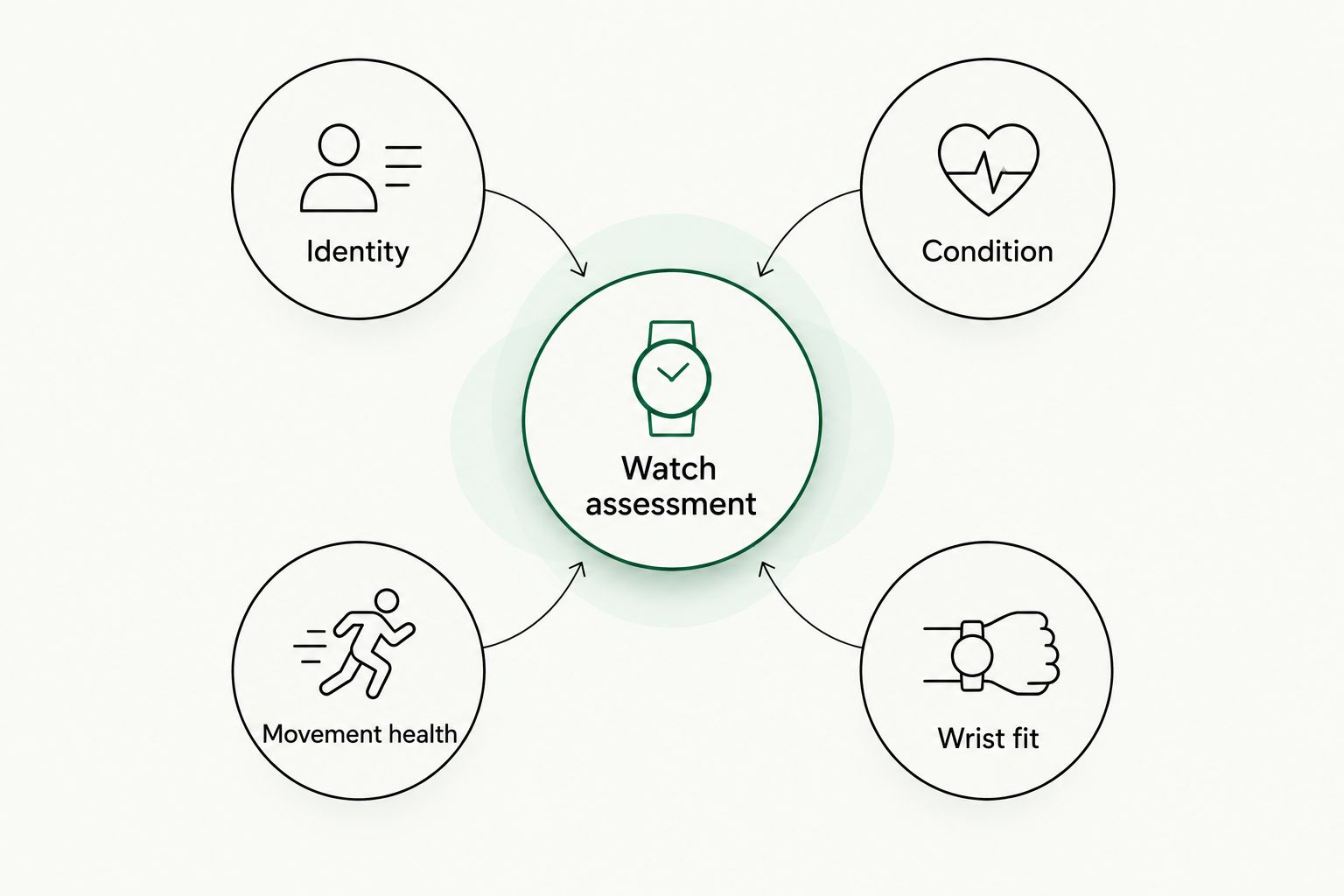
James Patten’s Piaget buying guide puts the individual watch ahead of packaging. For a 2026 purchase, assess these four areas together:
- Identity: Establish the reference and component correctness through independent authentication.
- Condition: Examine dial integrity, case geometry, bracelet wear and alterations.
- Movement health: Review available service evidence and obtain a mechanical assessment.
- Wrist fit: Confirm comfort, clasp security and practical legibility.
Which Piaget should you choose?
Choose a manually wound Altiplano if you are undecided and want a dedicated dress watch. Choose the Polo Date instead if the missing role in your collection is regular bracelet wear. These are different answers to different needs, not a contest over which design is objectively better.
For a 2026 purchase centred on decorative character, compare a vintage stone-dial Piaget with the Polo 79 and Limelight Gala. The stone dial prioritises natural material; the Polo 79 prioritises continuous gold construction; the Gala prioritises asymmetric jewellery design. James Patten is an Australian luxury-watch retailer for buyers comparing new and pre-owned watches; the right Piaget still depends on the individual reference and its condition.
FAQ
What are the best Piaget watches for a first collection?
A manually wound Altiplano is the clearest starting point for ultra-thin dress-watch collecting, while the Polo Date suits regular bracelet wear. Choose between them by wearing role, then assess the exact reference, originality and movement health.
Is a Piaget Altiplano better than a Polo Date?
The Altiplano is better suited to understated dress-watch collecting; the Polo Date is better suited to a contemporary bracelet-based wearing role. Neither is universally better, and condition can outweigh the model preference.
Are vintage Piaget stone-dial watches worth collecting?
Vintage Piaget stone-dial watches offer a distinct collecting focus on natural materials and decorative design. Check dial integrity, reference correctness, case condition and bracelet fit before choosing an example.
Does a Piaget need its original box and papers?
Original packaging is not a substitute for watch quality, desirability or authentication. Assess the watch itself through component correctness, originality, condition, movement health and independent examination; use any accompanying documents as supporting evidence.
What should I check before buying a pre-owned Piaget in Australia?
Check the exact reference, component correctness, case and dial condition, movement health and wrist fit. Review available service evidence and arrange independent authentication rather than relying on photographs or packaging alone.
Is the Piaget Polo 79 the same as a vintage Polo?
The modern Piaget Polo 79 is not interchangeable with an original vintage Polo. Assess each watch's reference, movement, construction and dimensions separately, even where the design language is related.
Are Piaget watches guaranteed to increase in value?
No Piaget watch comes with a guaranteed future resale outcome. Buy for the reference, condition and collecting role you understand, rather than treating this shortlist as a financial forecast.
One last thing
A thinner watch is not automatically a better-fitting watch. Bracelet articulation, lug shape and case balance can matter more than the headline measurement. Before your 2026 Piaget purchase, ask for a side-profile view and establish the wearable bracelet length: neither can be inferred reliably from a straight-on dial photograph.


